Jump to Recipe
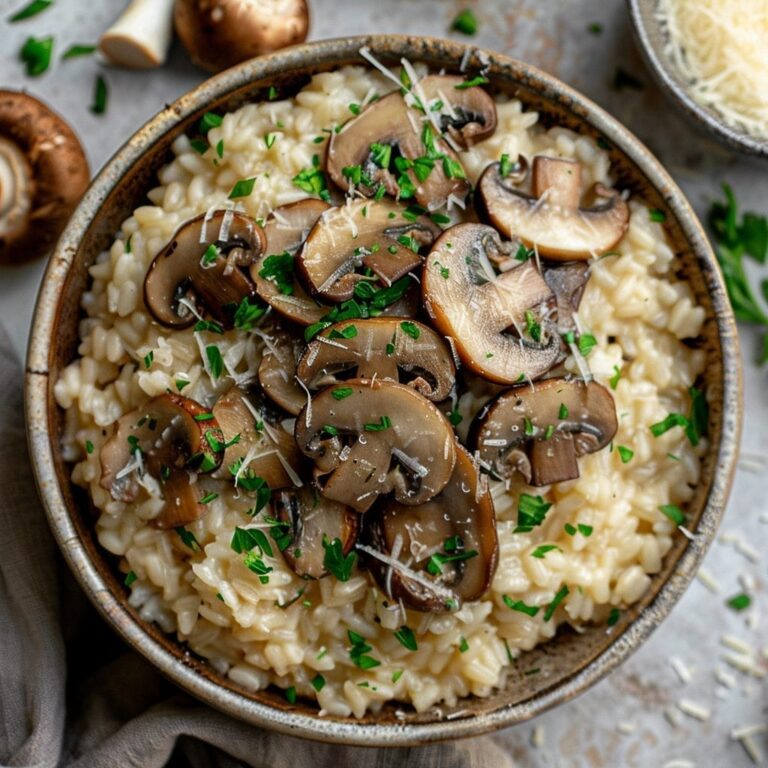
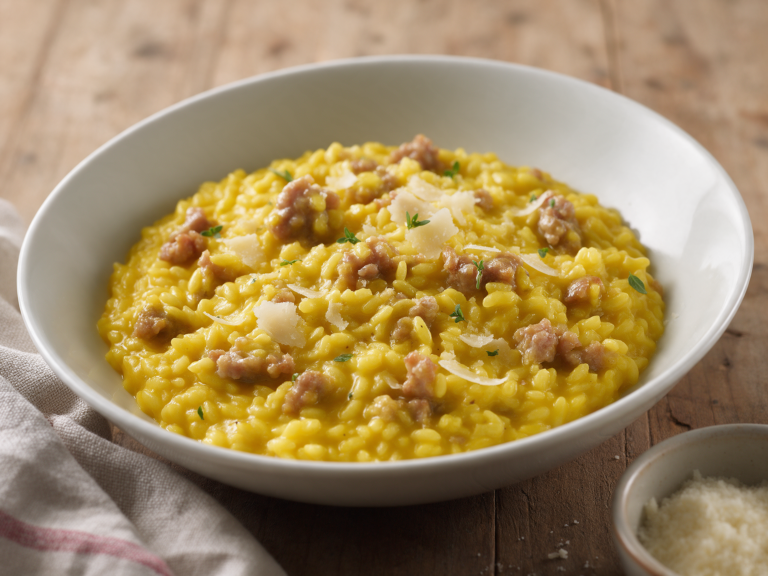
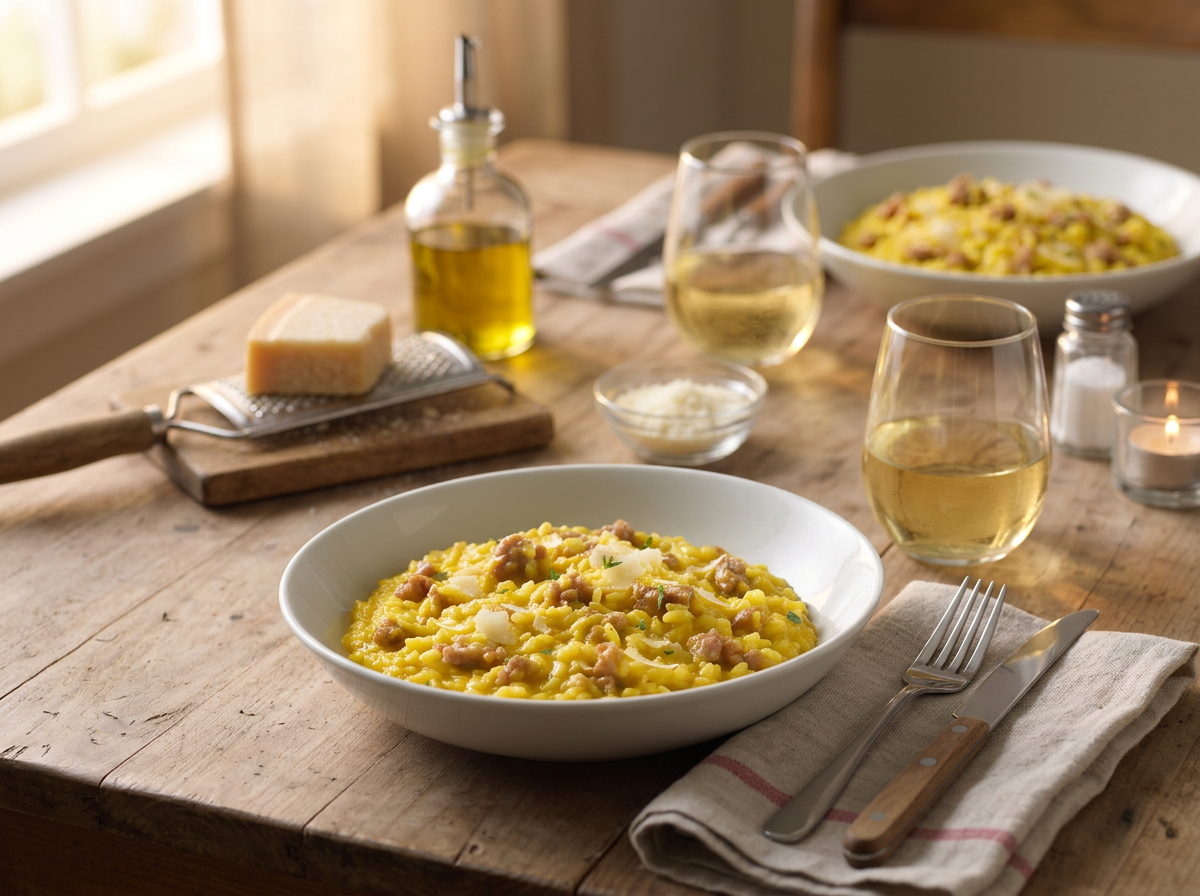
Risotto alla monzese is the saffron risotto of Monza, made with luganega, a thin, mild pork sausage, and finished with butter and Parmigiano instead of cream. It takes about 50 minutes, most of it stirring, and serves four.
Luganega is seasoned lightly with salt and pepper, so it flavors the rice without drowning the saffron. That balance is the point. If you can’t find it, mild Italian pork sausage without fennel works.
You’ll build it the usual way: a soft onion base, a short toast for the rice, a splash of white wine, then hot broth one ladle at a time. The saffron goes in after about 10 minutes of broth, already steeped, so the color spreads evenly.
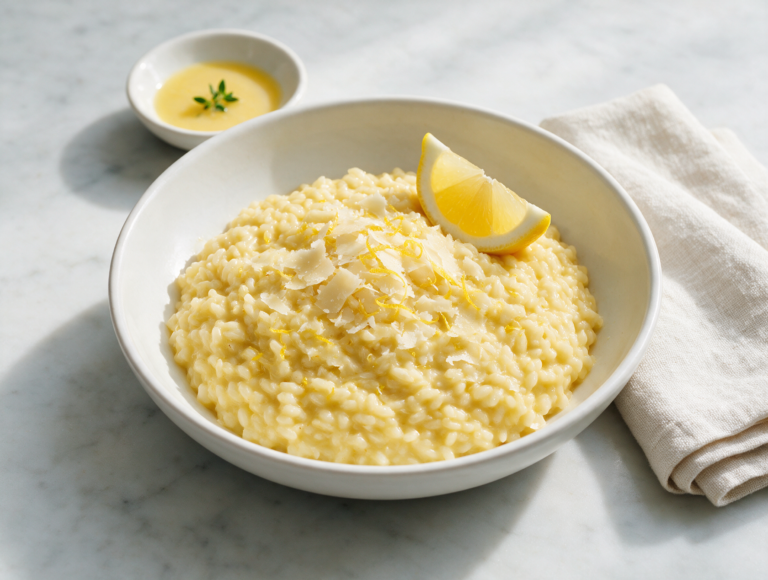
The texture, not the cream, defines the result. You want rice that’s tender with a slight bite, in a sauce that flows slowly across the bowl.
Why You’ll Love This Recipe
- Gets its saffron color and aroma without any cream
- Luganega seasons the rice from the inside as it cooks
- Built from pantry staples, with budget-friendly sausage swaps
- Leftovers fry into crisp risotto al salto the next day
Ingredient Notes
- luganega: Luganega is a thin, coiled, mildly seasoned pork sausage from Lombardy. Mild Italian pork sausage without fennel is the closest substitute, and sweet Italian sausage works if fennel is faint.
- saffron threads: Use threads rather than powder when you can, and measure carefully. About 0.3 g (a generous pinch) is enough for 4 servings, and doubling it makes the rice taste medicinal.
- carnaroli rice: Carnaroli holds its shape and gives a forgiving, creamy-tasting starch. Vialone Nano or Arborio work too, but Arborio goes soft faster, so start tasting a minute earlier.
- chicken broth: Low-sodium chicken broth or a light beef broth works best. The sausage and Parmigiano already carry salt, so a salty broth makes the finished risotto hard to correct.
- Parmigiano Reggiano: Grate it finely so it melts into the rice rather than clumping. Grana Padano is a lower-cost swap with a slightly milder taste.
- dry white wine: Use something crisp and unoaked, like Pinot Grigio. Practical pantry note: if you’d rather skip wine, use 120 ml extra broth and a squeeze of lemon at the end.
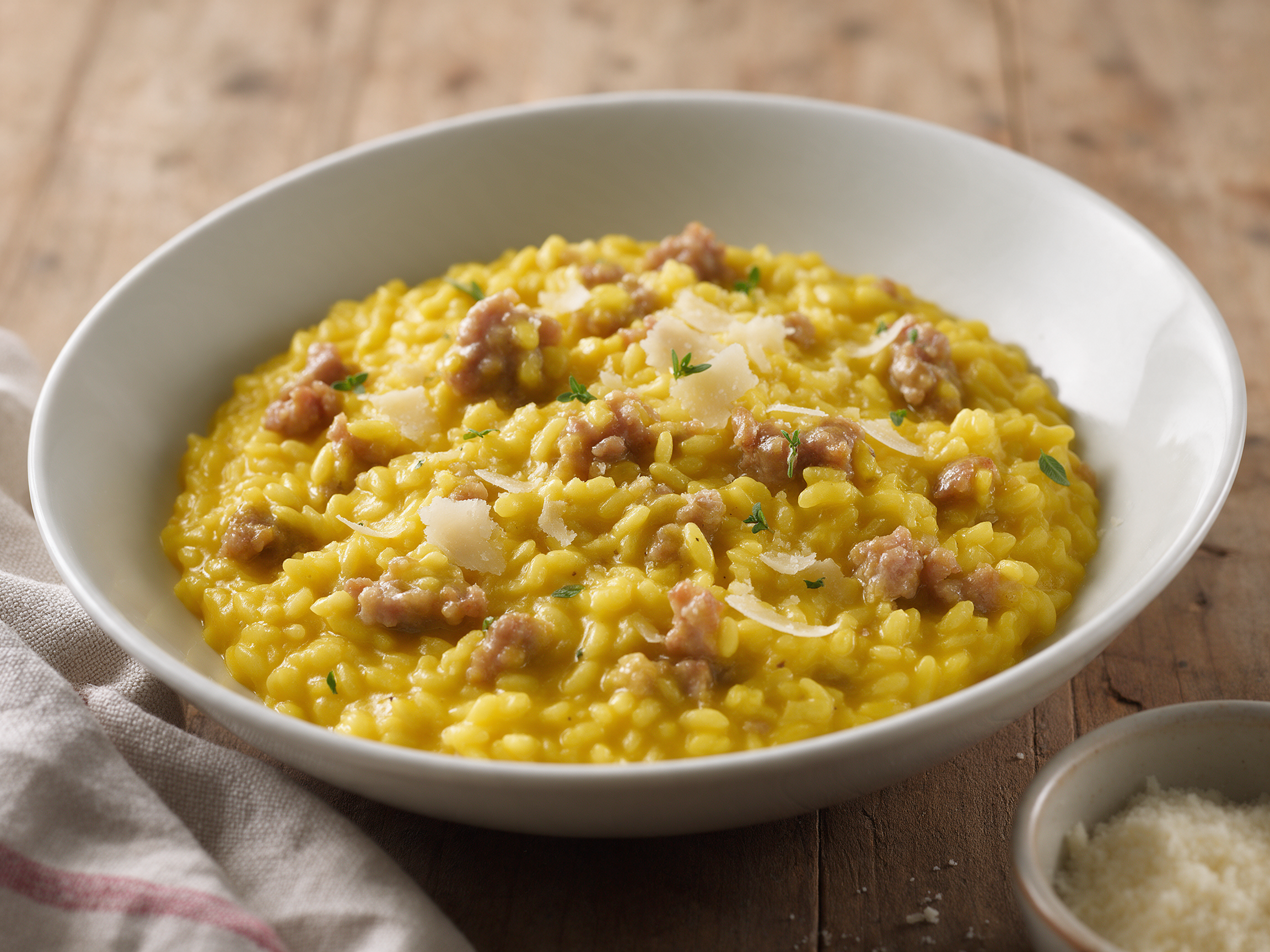
Silky Risotto alla Monzese with Luganega and Saffron
Ingredients
Method
- Bring the 1.2 L / 5 cups of broth to a bare simmer in a 2-quart / 1.9 L saucepan and keep it on the lowest heat. Ladle 60 ml / 1/4 cup into a small bowl, add the saffron threads, and let them steep while you cook. Remove the casings from the luganega and break the meat into 2 cm / 3/4-inch pieces.
- Melt 30 g of the butter in a 28 cm / 11-inch straight-sided sauté pan over medium heat. Add the onion and a small pinch of salt and cook for 6 minutes, stirring, until soft and translucent with no color.
- Add the luganega and break it up with the spoon. Cook for 5 minutes until no longer pink and pale gold. Don't push it to dark brown, because hard-browned luganega turns dry and its roasted flavor covers the saffron.
- Stir in the rice and toast for 2 minutes, until the edges of the grains turn translucent and the rice makes a glassy sound against the spoon. Pour in the wine and cook for 2 minutes, until it smells less sharp and the pan is nearly dry.
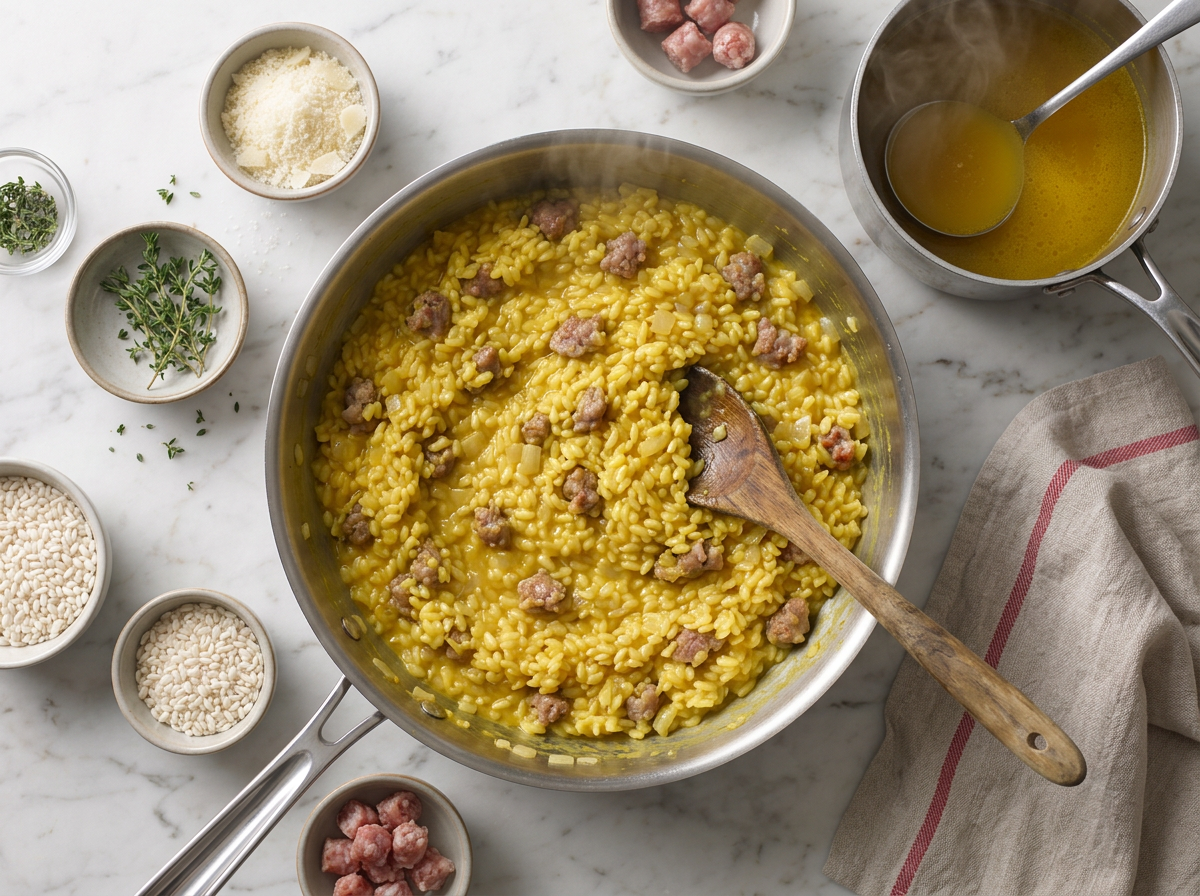
- Add the hot broth one ladle (about 150 ml) at a time, stirring often and waiting until each addition is mostly absorbed before adding the next. After about 10 minutes, stir in the saffron and its liquid. Keep going for 18 minutes total, until the rice is tender with a slight bite at the center. Taste a grain at 16 minutes.
- Take the pan off the heat. Add the remaining 30 g cold butter, cut into cubes, and the grated Parmigiano, then beat hard for 1 minute until glossy. The risotto should flow slowly when you tilt the pan, so add a splash of broth if it feels stiff. Taste, then season with salt and pepper. Cover and rest for 2 minutes.
- Spoon into warm shallow bowls and serve right away, with extra Parmigiano at the table.
Notes
- Start the saffron steeping first, since it needs at least 10 minutes in hot broth.
- Use a wide pan so the rice sits in a layer about 3 cm deep.
- Add the finishing butter cold and off the heat for a glossy, flowing texture.
- Salt only after tasting, since sausage, broth and cheese all add sodium.
Tips for Success
- Keep the broth at a bare simmer on the back burner so every ladle goes in hot and the rice never stalls.
- Steep the saffron in hot broth for at least 10 minutes so the color spreads evenly instead of showing as orange flecks.
- Stir often but not constantly, and add the next ladle only when your spoon leaves a clear trail across the bottom of the pan.
- Taste a grain at 16 minutes, then again at 18, and pull the pan once the center has a slight bite.
- Season at the end, after the cheese goes in, because the luganega, the broth and the Parmigiano all carry salt.
Variations
- Skip the sausage and add 30 g extra butter for a plain saffron risotto that sits closer to risotto alla milanese.
- Brown the luganega separately in a skillet until deeply golden and fold it in at the end for firmer, roastier pieces.
- Stir in 100 g frozen peas during the last 3 minutes of cooking for sweetness and a vivid green contrast.
Storage and Reheating
Risotto alla monzese keeps in the fridge for 2-3 days in an airtight container. Spread it in a shallow dish so it cools quickly, and refrigerate it within 1 hour of cooking.
To reheat, put it in a 24 cm / 10-inch nonstick skillet with 60 to 100 ml / 1/4 to 1/3 cup hot broth or water per portion. Warm it over medium-low heat for 4 to 5 minutes, stirring, until it’s loose again and steaming hot at 165 F / 74 C.
Or skip the reheating: press cold leftovers into a patty and pan-fry in butter for 3 minutes per side for risotto al salto. Freezing isn’t worth it, because the rice turns soft and grainy once thawed.
Serving Suggestions
Risotto alla monzese is a primo, served in warm shallow bowls right after its 2-minute rest. Tap the bowl on the counter so the rice settles flat, and add a little more Parmigiano at the table.
For a full dinner, pair it with a bitter salad. Radicchio or rocket dressed with lemon juice and olive oil balances the butter and the pork.
Pour a glass of Franciacorta or Lugana alongside. Both have enough acidity to keep each forkful tasting clean.
FAQ
Why is my risotto alla monzese gluey instead of silky?
Gluey risotto usually means the rice cooked past tender. Pull the pan when the center still has a slight bite, around 18 minutes after the first ladle of broth, then beat in the butter and Parmigiano off the heat. Rinsing the rice beforehand also washes away the surface starch that makes the sauce silky.
Can I use saffron powder instead of threads in risotto alla monzese?
Yes, use about 1/8 tsp saffron powder in place of the threads. Stir it straight into the broth you add at the 10-minute mark, since powder dissolves instantly and needs no steeping. Taste before adding more, because too much saffron tastes bitter and medicinal.
What is the difference between risotto alla monzese and risotto alla milanese?
Risotto alla monzese is risotto alla milanese with luganega sausage added. Both use saffron, butter and Parmigiano, and neither uses cream. The milanese version is the plain saffron rice, traditionally cooked with bone marrow, while the monzese version from Monza gets its savory depth from the crumbled pork sausage.
Can I freeze leftover saffron risotto with luganega?
You can, but the texture suffers. Thawed rice turns soft and grainy and loses its silky flow, even though the sausage holds up fine. Refrigerate leftovers for 2-3 days instead, or fry them into risotto al salto, which suits cold, set rice better than a bowl does.
What wine goes with risotto alla monzese?
A dry Lombard sparkling like Franciacorta is a good match, and a crisp white such as Lugana also works. The acidity balances the butter and the pork sausage. If you prefer red, pick a light one like a young Barbera served slightly cool.
Is risotto alla monzese gluten free?
Yes, as long as your sausage and broth are. Rice, butter, wine and Parmigiano contain no gluten, but some Italian sausages include rusk or breadcrumbs as filler, and some stock cubes contain wheat. Check both labels. It does contain dairy from the butter and cheese.