Jump to Recipe
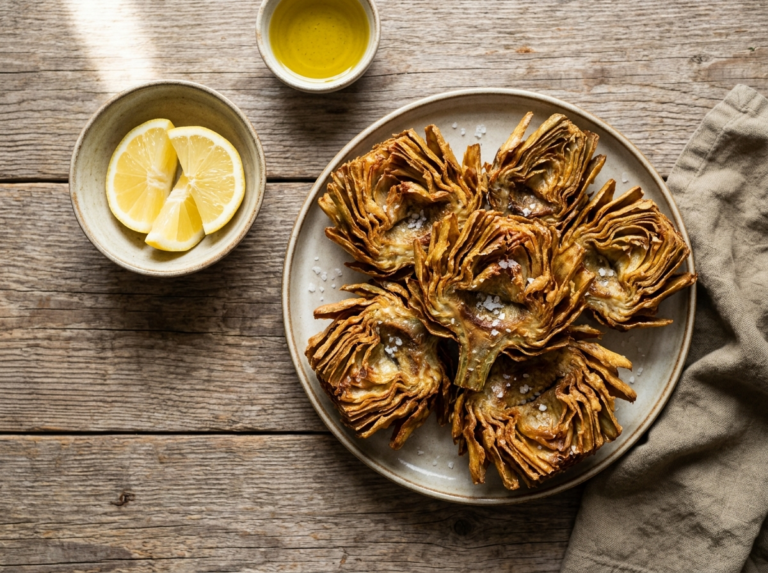
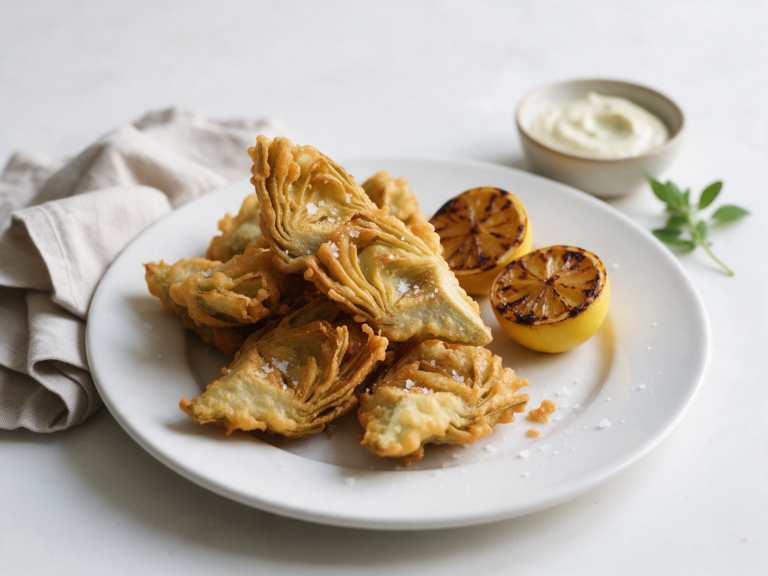
Carciofi fritti in pastella, or battered artichokes, are wedges blanched for 6 minutes, dipped in a thin batter of flour, egg, and cold sparkling water, then fried at 175 C / 350 F until golden. The shell stays light and the heart stays tender.
Blanching is the step most recipes skip. Raw wedges from a large globe artichoke fry up leathery at the outer leaves, so a short simmer in salted lemon water sets the texture before the batter ever touches oil.
Dry the wedges well. Any water left on the leaves makes the batter slide off in the pot, and you end up with bare artichokes and loose crumbs of fried batter. I pat them with a clean towel, let them sit for 5 minutes, then dust them with flour.
Trimming takes the longest, about 25 minutes for six artichokes. You can do it the night before and keep the wedges in lemon water in the fridge. After that, the frying is quick.
Why You’ll Love This Recipe
- Tender hearts under a thin, crisp shell
- Trimming and blanching can be done ahead
- Batter uses flour, egg, salt, and sparkling water
- Works as an antipasto, side dish, or fritto misto
Ingredient Notes
- Globe artichokes: Pick heavy ones with tight, squeaky leaves. Spring violetti or Romanesco types have less choke to remove. Frozen quartered hearts work out of season: thaw them, dry them well, and skip the blanching.
- Sparkling water: Keep it in the fridge until the moment you whisk. The cold and the bubbles give a lighter crust. Ice-cold still water works but gives a denser shell.
- All-purpose flour: Italian 00 flour works the same way. For a gluten-free batter, use a 1:1 gluten-free blend or a mix of rice flour and cornstarch.
- Sunflower oil: Use a neutral oil with a high smoke point. Extra-virgin olive oil darkens too fast at 175 C / 350 F and costs more for a shallow fry.
- Lemons: Acidulated water stops the cut artichokes from browning. Practical pantry note: bottled lemon juice works in the bath, but use fresh for the serving wedges.
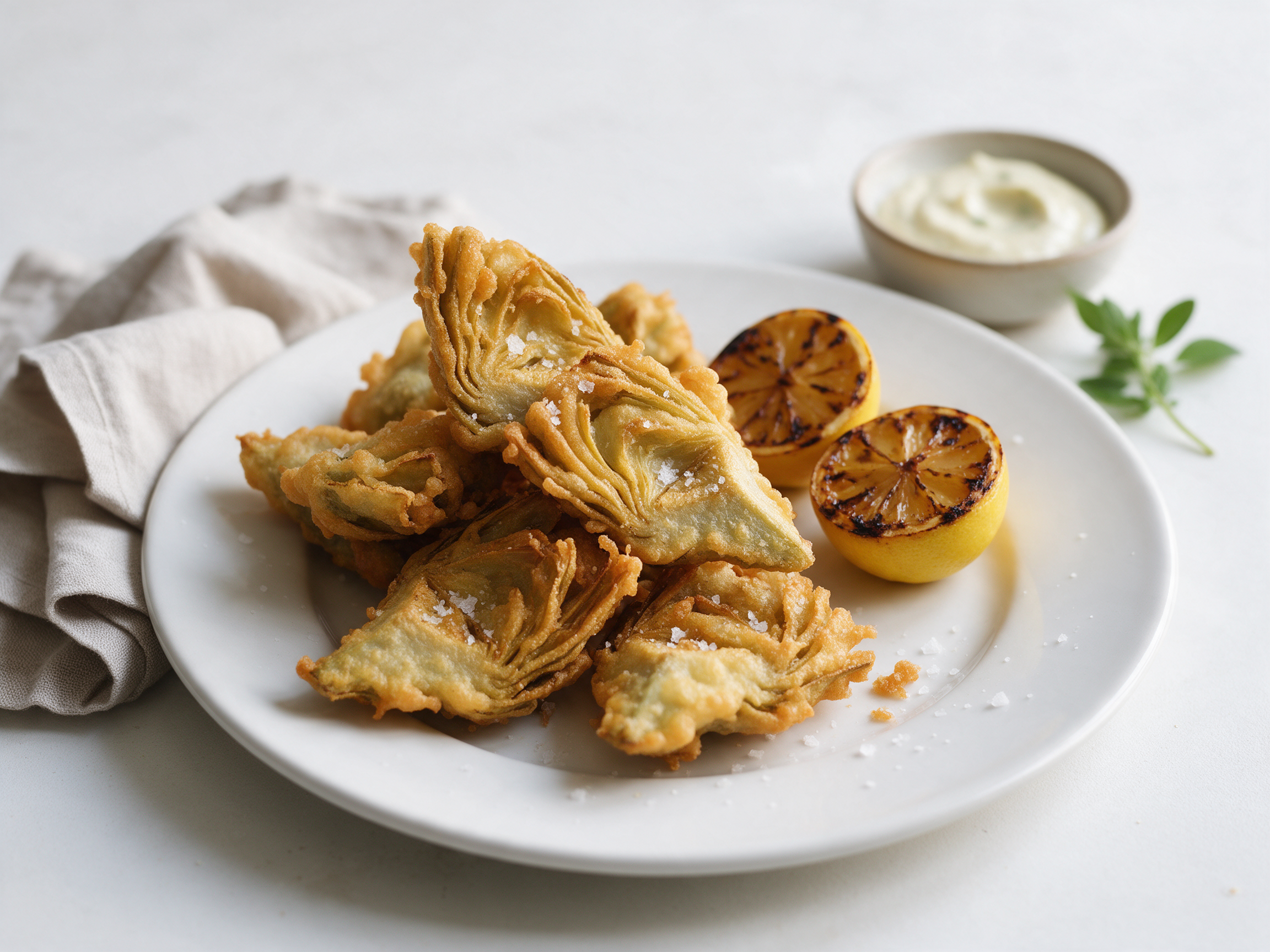
Carciofi Fritti in Pastella: Crisp Battered Artichokes
Ingredients
Method
- Stir the juice of 1 lemon into 1 L cold water in a bowl. Snap off the tough outer leaves of each artichoke until you reach pale yellow-green ones, cut off the top third, and peel the stem and trim the base. Halve each artichoke lengthwise, scoop out the hairy choke with a teaspoon, then cut each half in two to make 24 wedges. Drop each wedge into the lemon water as you go.
- Bring 2 L water, the kosher salt, and the juice of 1/2 lemon to a boil in a 4-quart / 3.8 L saucepan. Drain the wedges, add them to the pot, and simmer for 6 minutes, until a paring knife slides into the stem end with slight resistance. Drain, spread on a clean towel, pat dry, and let them sit for 5 minutes.
- Pour the oil into a 24 cm / 9.5-inch heavy-bottomed pot and heat over medium until a thermometer reads 175 C / 350 F, about 8 minutes. Meanwhile, heat the oven to 120 C / 250 F and set a wire rack in a 33 x 46 cm / 13 x 18 inch sheet pan.
- Whisk the 150 g flour, fine salt, and egg in a bowl, then pour in the cold sparkling water and whisk just until smooth. The batter should coat the back of a spoon in a thin, translucent layer. A few small lumps are fine. Put the 30 g dusting flour on a plate.
- Roll the dry wedges in the dusting flour and shake off the excess. Dip 6 wedges, one at a time, into the batter and let the extra drip off. Lower them into the oil away from you and fry for 3 to 4 minutes, turning once, until deep golden and blistered.
- Lift the wedges onto the rack with a spider skimmer, sprinkle with flaky salt, and keep them in the oven. Wait about 1 minute for the oil to return to 175 C / 350 F, then repeat with 3 more batches of 6 wedges. Serve within 20 minutes of the first batch, with the lemon wedges.
Notes
- Dry the blanched wedges fully before flouring, or the batter slides off in the oil.
- Check the oil with a thermometer and hold it at 175 C / 350 F.
- Mix the batter right before frying so the sparkling water bubbles stay in it.
- Serve within 20 minutes of the first batch for the crispest shell.
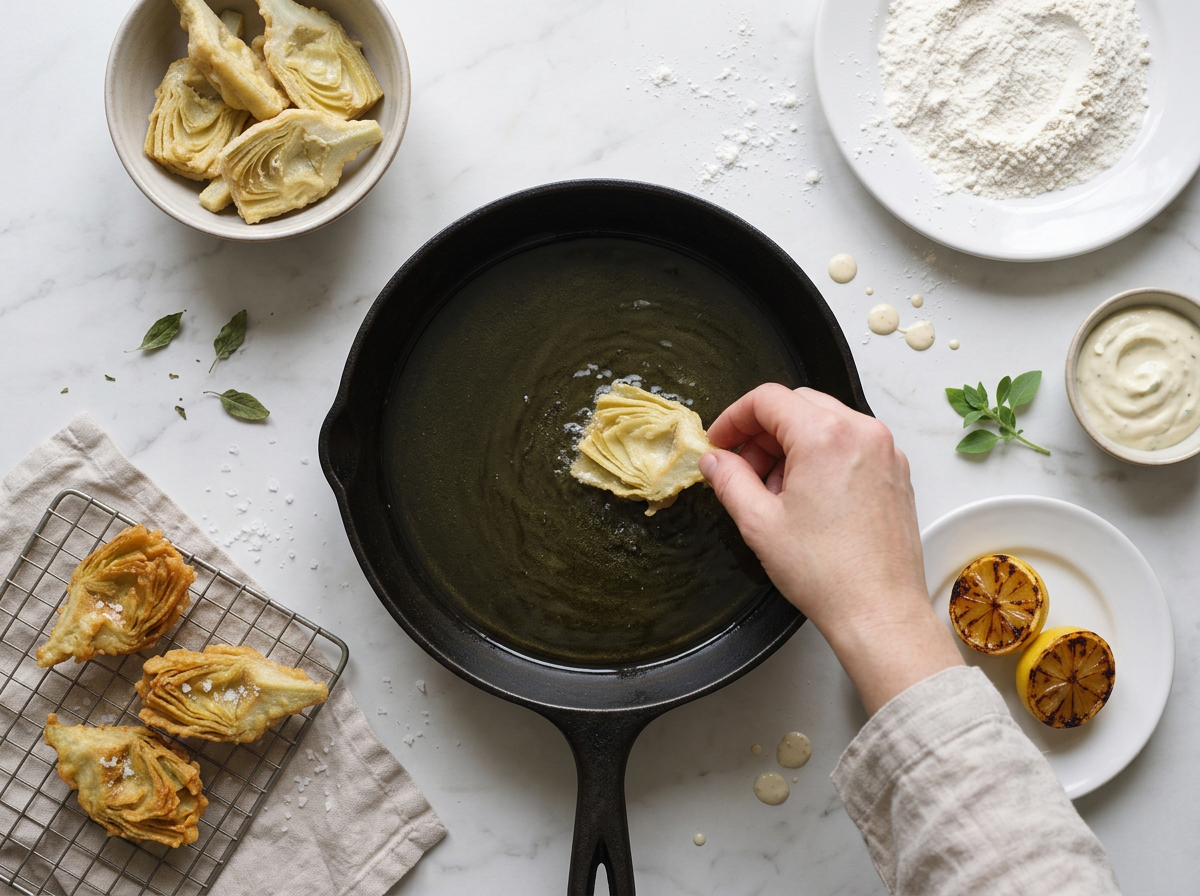
Tips for Success
- Rub cut surfaces with lemon and drop each wedge into the lemon water right away so the flesh stays pale instead of turning gray-brown.
- Pat blanched wedges dry with a clean towel and rest them 5 minutes before dusting with flour so the batter clings.
- Whisk the batter just before frying and use it cold, because the bubbles in the sparkling water are what keep the crust light.
- Fry in four batches of 6 wedges and let the oil climb back to 175 C / 350 F between batches.
- Salt the wedges the second they leave the oil and hold them on a wire rack in a 120 C / 250 F oven for up to 20 minutes.
Variations
- Stir 2 tbsp grated Pecorino and 1 tbsp chopped parsley into the batter for a savory, slightly salty crust.
- Use the same batter on blanched cauliflower florets, zucchini sticks, or whole sage leaves to build a small fritto misto.
- Swap in 450 g thawed and dried frozen artichoke hearts and skip the blanching when fresh ones are out of season.
Storage and Reheating
Carciofi fritti in pastella are best eaten within 20 minutes of the first batch leaving the oil, because steam trapped inside the artichoke softens the shell as it cools. I don’t reheat them, since the batter turns chewy in both oven and microwave.
Do the work ahead instead. Trimmed wedges keep overnight, up to 12 hours, in lemon water in the fridge. Blanched and dried wedges keep 2 days in an airtight container lined with a paper towel. Mix the batter and fry on the day.
Leftover fried wedges keep 1 day in a covered container in the fridge. Eat them cold, chopped into a salad with lemon juice and olive oil. Skip the freezer for the fried wedges.
Serving Suggestions
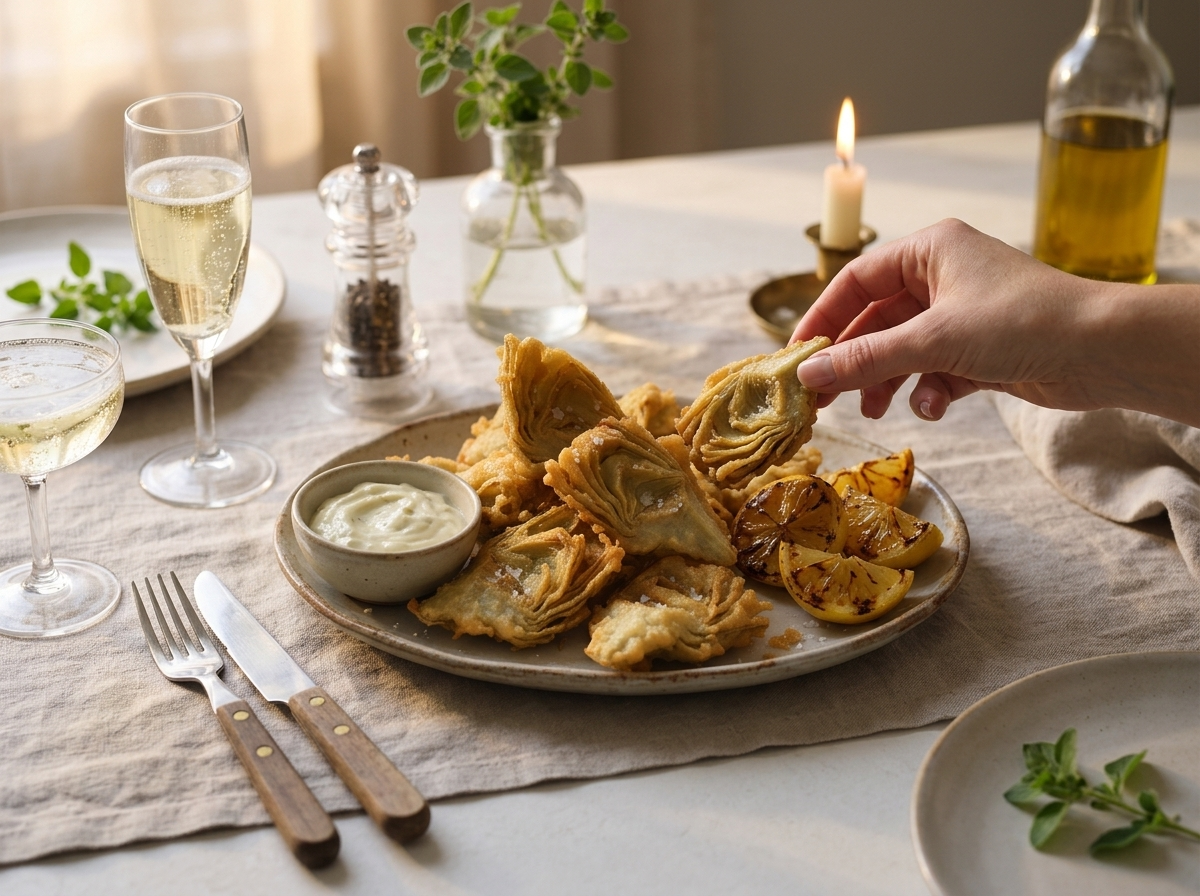
Carciofi fritti in pastella are best served hot as an antipasto, straight from the rack with lemon wedges on the side. Squeeze the lemon over them just before eating so the crust stays crisp.
A garlic aioli or a yogurt dip with lemon zest and a pinch of salt cuts through the fried batter. For a bigger spread, fry zucchini sticks and sage leaves in the same batter and serve them together as a small fritto misto.
Pour a chilled Prosecco or a dry Vermentino alongside. In spring, the wedges also work as a side dish next to roast lamb or a simple frittata.
FAQ
How do I know when the artichoke wedges are blanched enough for battering?
A paring knife should slide into the thickest part of the stem end with slight resistance, which takes about 6 minutes for quarters of a medium globe artichoke. They should feel like a just-cooked potato, not soft. The frying adds another 3 to 4 minutes of cooking, so don’t push them to full tenderness in the water.
Can I use still water or beer instead of sparkling water in the batter?
Yes, ice-cold still water works, but the crust will be denser because the carbonation adds the small air pockets. A light lager also works and adds a faint malt note. Keep the liquid near 4 C / 39 F and mix the batter right before you fry.
Can I batter and fry carciofi fritti ahead of a dinner party?
Do the trimming and blanching ahead, not the frying. Blanched, dried wedges keep 2 days in an airtight container in the fridge. Fried wedges lose their crunch after about 20 minutes, so mix the batter and fry just before guests sit down, holding batches on a rack in a 120 C / 250 F oven.
What goes well with carciofi fritti in pastella?
Lemon wedges are the baseline, and a garlic aioli or lemon-yogurt dip adds a cool, sharp contrast. For a fuller table, fry zucchini sticks and sage leaves in the same batter. A chilled Prosecco or dry Vermentino suits the salty, fried crust well.
Is carciofi fritti in pastella gluten free, and how do I adapt it?
No, the batter and the flour dusting both use wheat flour. To adapt it, swap in a 1:1 gluten-free flour blend, or use 100 g rice flour plus 50 g cornstarch for the batter. The crust comes out paler and a little more brittle. The recipe has no dairy as written.
What is the difference between carciofi fritti in pastella and carciofi alla giudia?
Carciofi alla giudia are whole Roman artichokes, flattened and fried twice in olive oil with no batter, so the leaves open like a flower. Carciofi fritti in pastella use cut wedges coated in a thin flour and egg batter and fried once. The batter version is faster and easier to share.