Jump to Recipe
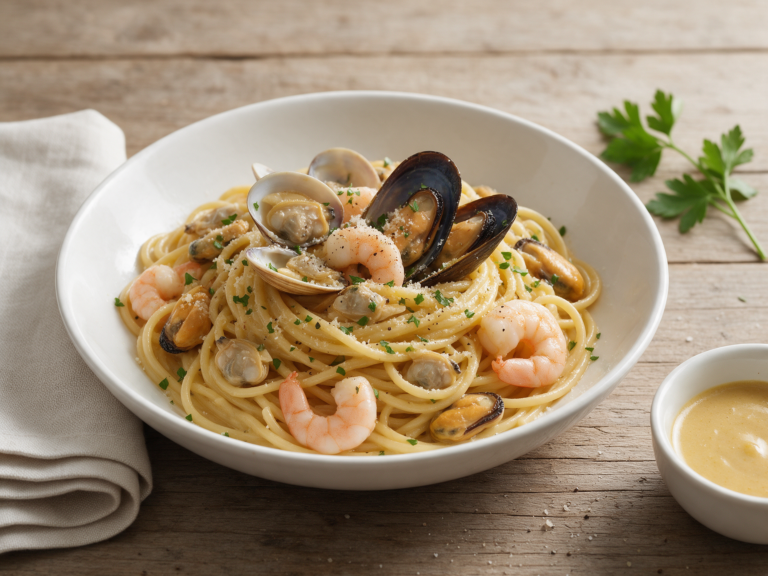
Spaghetti alla carbonara di mare is a seafood take on Roman carbonara, where clams, mussels and shrimp replace the guanciale and their briny liquor flavors the egg sauce.
No cream goes in. The sauce is four yolks, one whole egg, a little Parmigiano and a splash of starchy pasta water, loosened by the shellfish liquor left in the pan.
The one thing that goes wrong is heat. If the pan is still hot when the eggs go in, they scramble into curds, so pull it off the burner and wait a full minute first.
It fits a weeknight: about 45 minutes, one pot and one deep pan. Serve it within 5 minutes of tossing, while the sauce is still loose and silky.
Why You’ll Love This Recipe
- Ready in 45 minutes with one pot and one pan
- Silky sauce built from yolks, Parmigiano and shellfish liquor
- Seafood cooks in stages, so nothing turns rubbery
- Shellfish and cheese can be prepped hours ahead
Ingredient Notes
- Clams and mussels: Buy them live and closed, with no cracked shells. Discard any mussel that stays open when tapped before cooking, and any clam or mussel that stays shut after cooking.
- Shrimp: Use raw, medium shrimp (21 to 25 per pound), peeled and deveined. Frozen raw shrimp thawed in the fridge work fine and cost less.
- Parmigiano Reggiano: I use it instead of Pecorino because the shellfish already bring plenty of salt. If you only have Pecorino, cut the amount to 35 g.
- Eggs: The sauce is warmed by the hot pasta and pan, not fully cooked. For pregnant guests, young children or anyone with a weakened immune system, use pasteurized eggs.
- Dry white wine: Pick something crisp like Pinot Grigio or Vermentino. If you’d rather skip alcohol, use 80 ml water with 1 tsp lemon juice.
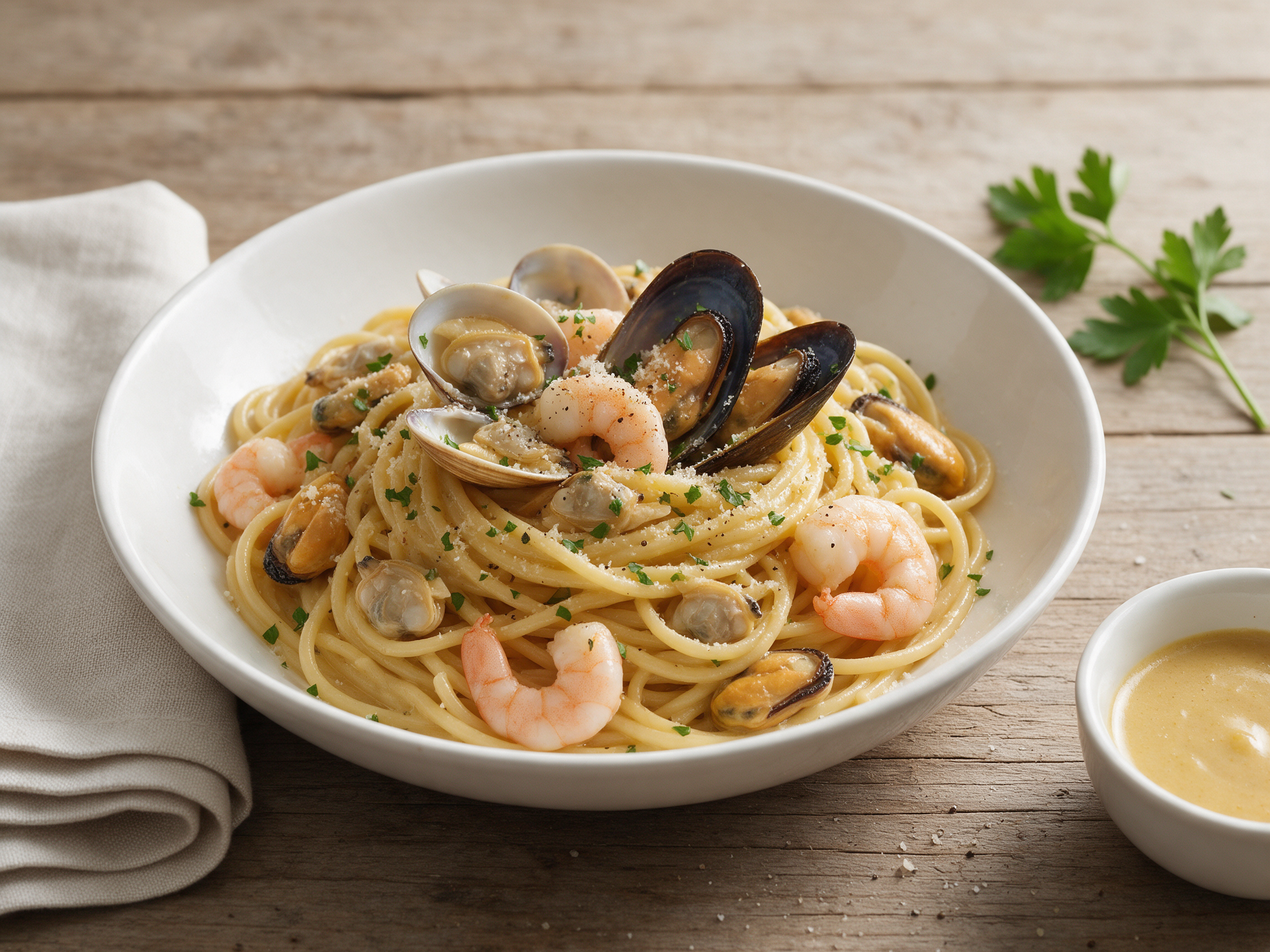
Spaghetti alla Carbonara di Mare with Clams and Shrimp
Ingredients
Method
- Scrub the clams under cold water and soak them in a 25 cm / 10-inch bowl with 1 liter of cold water and 2 tbsp coarse sea salt for 20 minutes. While they soak, scrub the mussels and pull off the beards. Discard any mussel with a cracked shell or one that stays open when tapped. Pat the shrimp dry and grate the Parmigiano.
- In a 20 cm / 8-inch bowl, whisk the egg yolks, whole egg, Parmigiano and black pepper until smooth. Set aside. Fill a 6-quart / 5.7 L pot with 4 liters of water, add 2 tsp coarse sea salt and bring to a boil.
- Drop the spaghetti into the boiling water and set a timer for 1 minute less than the package time, usually 8 to 9 minutes. Lift the clams out of their soaking water by hand and leave the grit behind.
- One minute later, warm the olive oil and garlic in a 30 cm / 12-inch deep sauté pan over medium heat for 1 minute, until the garlic turns pale gold. Pour in the wine and let it bubble for 30 seconds. Add the clams and mussels, cover, and cook over medium-high heat for 5 to 6 minutes, shaking the pan once or twice, until the shells open. Move the opened shellfish to a bowl with tongs and throw out any that stayed shut.
- Add the shrimp to the pan liquor and cook for 2 minutes, turning once, until pink and opaque. Move them to the shellfish bowl. Pull the meat from half the mussels and clams while the pasta finishes, and leave the rest in their shells.
- Scoop out 250 ml pasta water, then drain the spaghetti and add it to the pan with the shellfish liquor. Toss over low heat for 1 minute, until the strands absorb the liquor and look glossy.
- Take the pan off the heat and wait 60 seconds. Pour in the egg mixture plus 60 ml pasta water and toss with tongs for 1 to 2 minutes, until the sauce clings to the strands like loose custard. Add more pasta water 1 tbsp at a time if it looks tight. Fold in the seafood and parsley, divide among warmed bowls and serve within 5 minutes.
Notes
- Soak clams for 20 minutes in salted water, then lift them out so the sand stays behind.
- Discard any clam or mussel that stays shut after cooking, and never pry shells open.
- Toss the pasta with the eggs off the heat, never over a flame.
- Reserve 250 ml pasta water before draining. You'll use roughly 60 to 120 ml.
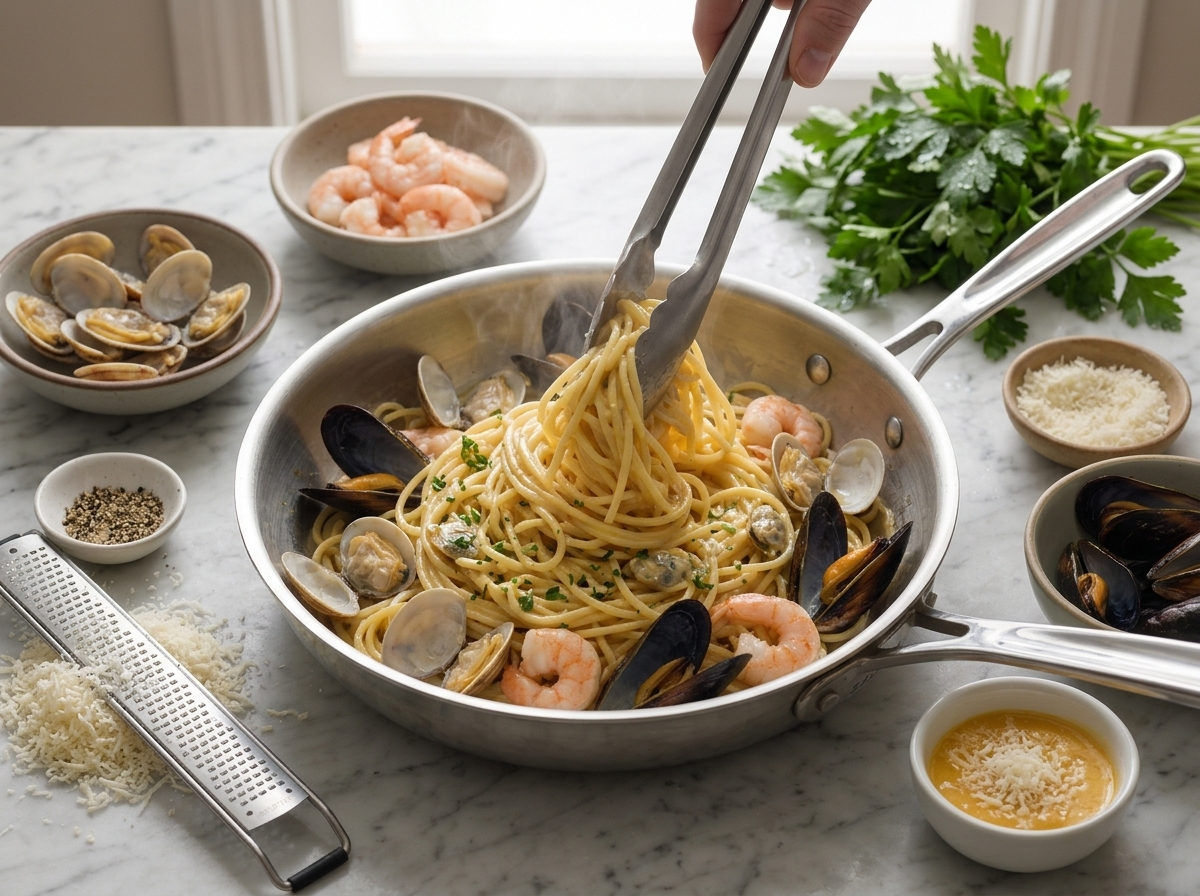
Tips for Success
- Lift clams out of their soaking water with your hands instead of pouring them into a colander, so the grit stays in the bowl.
- Pull the pan off the heat and wait 60 seconds before adding the egg mixture. Residual heat sets the sauce without scrambling it.
- Salt the pasta water lightly, about 2 teaspoons for 4 liters, because the clams, mussels and Parmigiano all add their own salt.
- Cook the spaghetti 1 minute short of the package time. It finishes in the pan and drinks up the shellfish liquor.
- Add pasta water 1 tablespoon at a time, tossing between additions, until the sauce flows off a spoon like thin custard.
Variations
- Render 80 g diced guanciale until crisp and use its fat in place of the olive oil for a closer nod to classic carbonara.
- Swap the shrimp for 200 g cleaned squid rings, seared for 90 seconds in the pan before the shellfish goes in.
- Finish with the zest of half a lemon, and add a pinch of chili flakes with the garlic for a spicier edge.
Storage and Reheating
Carbonara di mare is best eaten within 5 minutes of tossing. The egg sauce tightens as it cools, and the shrimp and shellfish turn rubbery once they’re cooked a second time.
If you have leftovers, cool them and refrigerate in an airtight container within 2 hours. Eat them within 1 day, cold, with a squeeze of lemon, like a pasta salad. Freezing doesn’t work here because the egg sauce splits and the seafood turns tough.
Prep ahead instead. Scrub the mussels, soak and drain the clams, and peel the shrimp up to 4 hours ahead, keeping them covered in the fridge. Grate the Parmigiano up to 2 days ahead, then whisk the eggs and cook just before serving.
Serving Suggestions
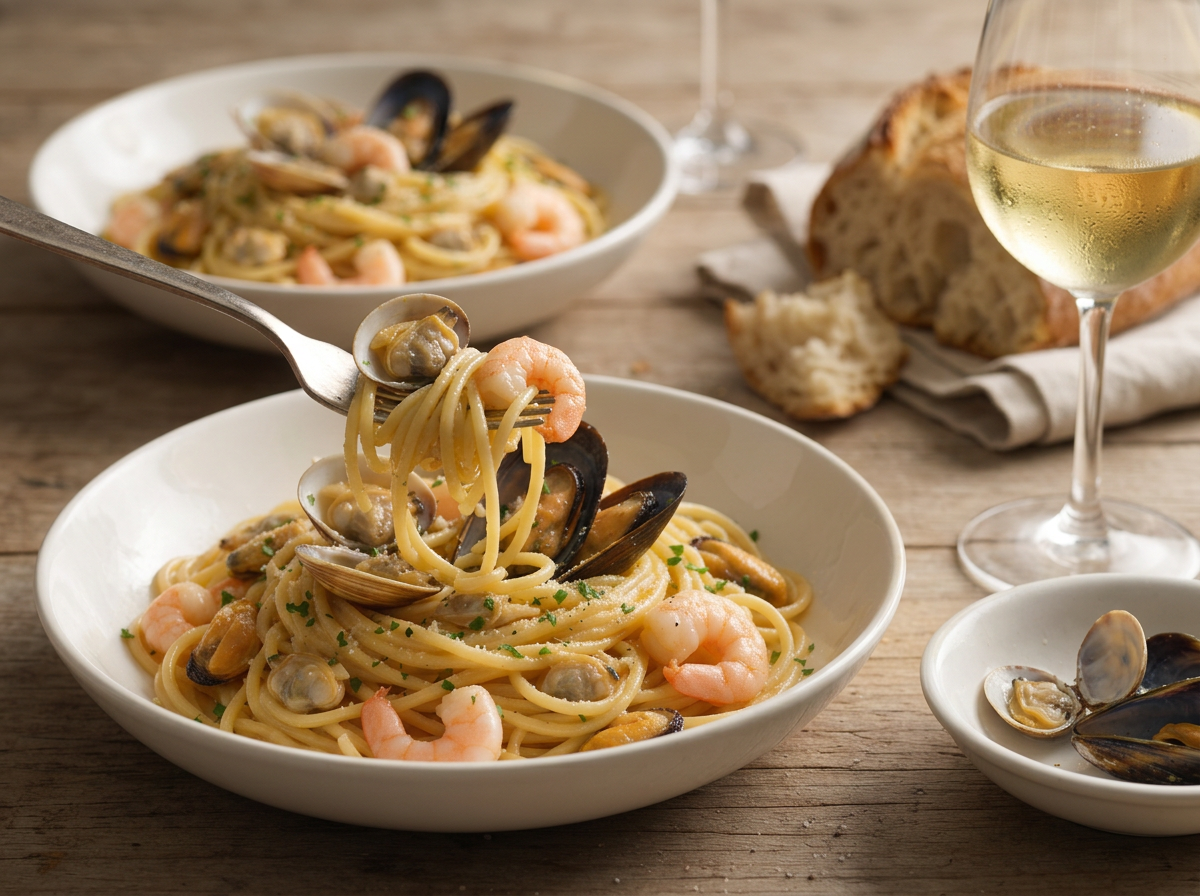
Spaghetti alla carbonara di mare works as a primo before a light fish course or as a full main for four. Serve it in warmed shallow bowls with the shells arranged on top, so the pasta stays hot.
A chilled, dry white like Vermentino or Falanghina suits it, and the same bottle can go into the pan. For a side, toss arugula with lemon juice and olive oil, or slice fennel thinly with orange segments.
Put out a crusty loaf and an empty bowl for shells. The bread is for the liquor left at the bottom of the plate.
FAQ
Why did my carbonara di mare scramble?
Scrambled eggs mean the pan was still too hot when the eggs went in. Take it off the burner for 60 seconds, mix 60 ml of pasta water into the eggs, and toss fast. If it has already curdled, a splash of pasta water and brisk stirring smooths it a little, but it won’t fully recover.
Can I use Pecorino Romano instead of Parmigiano in seafood carbonara?
Yes, but use about 35 g instead of 50 g. Pecorino is saltier, and the clams and mussels already add brine. Its sharp, sheepy flavor can also overpower the shrimp, so I prefer Parmigiano Reggiano in this version.
Can I make carbonara di mare ahead for a dinner party?
Not the finished dish, because the egg sauce tightens and the seafood toughens as it sits. Prep the parts instead. Scrub the mussels, soak and drain the clams and peel the shrimp up to 4 hours ahead, and grate the cheese up to 2 days ahead. Cooking then takes about 20 minutes.
What wine goes with spaghetti alla carbonara di mare?
A dry, mineral white such as Vermentino, Falanghina or Soave works well, since it cuts through the egg and echoes the brine of the shellfish. Serve it chilled. Use the same bottle for the 80 ml that goes into the pan.
Are the eggs in carbonara di mare safe to eat?
The eggs are warmed by the hot pasta and pan, not fully cooked, so a small risk remains. Use pasteurized eggs if you’re cooking for pregnant guests, young children or anyone with a weakened immune system. Separately, throw away any clam or mussel that stays shut after cooking.
What is the difference between carbonara di mare and classic carbonara?
Classic Roman carbonara uses guanciale, Pecorino Romano, eggs and black pepper. Carbonara di mare replaces the cured pork with clams, mussels and shrimp, usually uses milder Parmigiano, and gets its savory depth from shellfish liquor. It’s a modern coastal riff, not a traditional Roman recipe.