
Jump to Recipe
Frittelle di riso di San Giuseppe are small fried rice fritters from southern Italy, made for St. Joseph’s Day on March 19. The base is short-grain rice simmered slowly in milk until it turns into something close to a thick, sweet porridge, then bound with eggs and flour before it hits hot oil.
The rice, not the frying, defines the fritter. Simmer it too fast and the grains stay chalky in the center. Cook it low and slow, closer to 25 to 30 minutes, and it turns glossy and almost sticky, which is exactly what holds the fritters together once the eggs go in.
I learned the hard way that the rice mixture needs to be fully cold before you add the eggs. Stir eggs into warm rice and you get little threads of scrambled egg through your batter, not a smooth dough.
Fry them in batches at a steady 170C / 340F, roll them in sugar while they’re still warm, and they disappear fast.
Why You’ll Love This Recipe
- Uses pantry basics: rice, milk, eggs, flour, citrus zest
- Rice base can be cooked and chilled a day ahead
- Crisp outside, soft porridge-like center in every bite
- Traditional St. Joseph’s Day treat that keeps well for days
Ingredient Notes
- Arborio rice: Carnaroli works too. Skip long-grain rice since the starch here is what holds the fritters together.
- whole milk: Gives the rice base richness. Low-fat milk works but the finished fritter tastes thinner.
- lemon and orange zest: Use a microplane and avoid the white pith, which turns bitter.
- large eggs: Add only once the rice base is completely cold, or the residual heat will scramble them.
- all-purpose flour: A 1:1 gluten-free blend works as a swap, though the fritters turn slightly denser.
- dark rum or Marsala: Optional but rounds out the citrus. Leave it out for a kid-friendly batch.
- sunflower oil: Or another neutral oil with a high smoke point, like peanut oil.
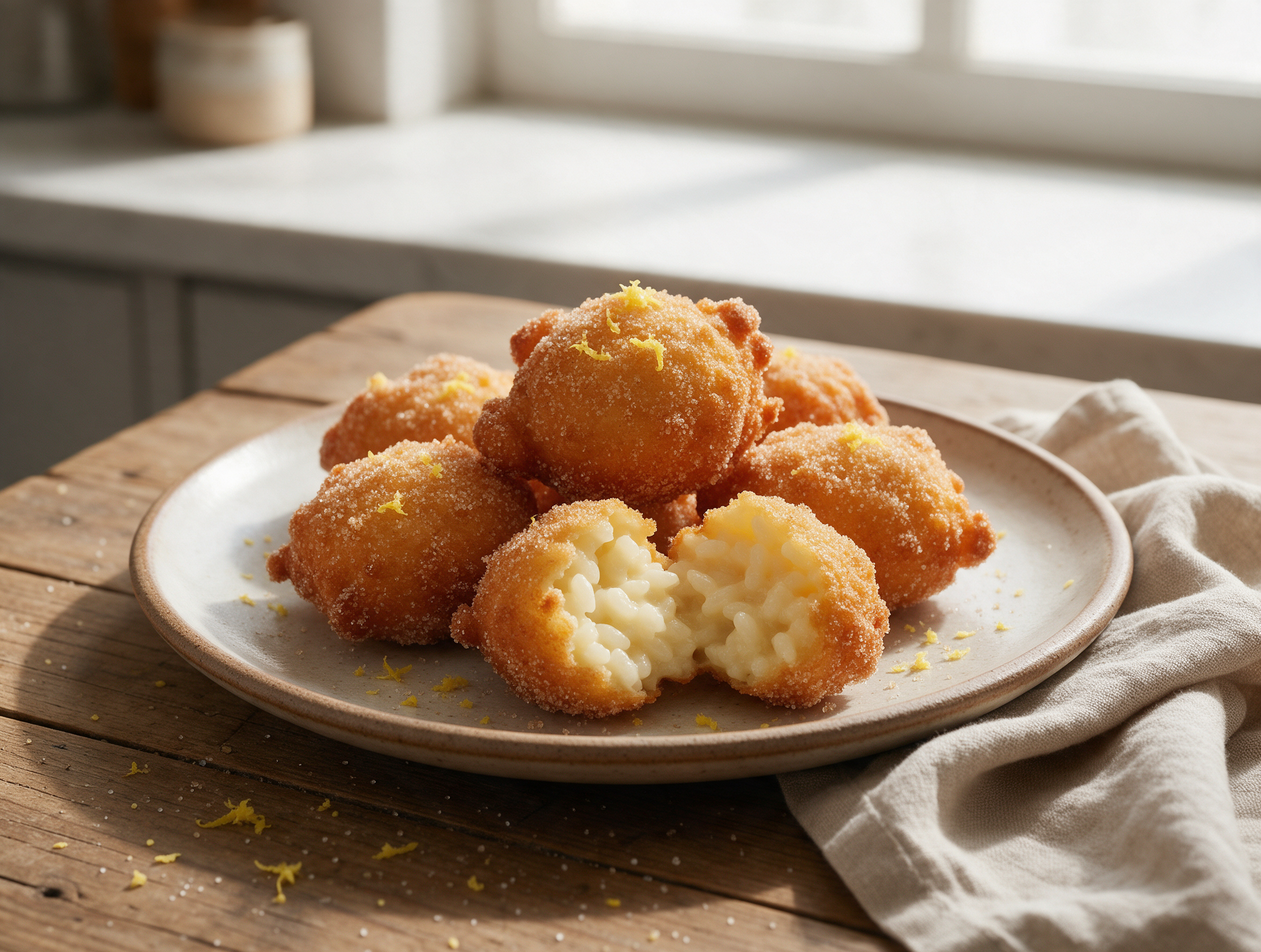
Frittelle di Riso: Crispy San Giuseppe Rice Fritters
Ingredients
Method
- Combine the milk, water, 60 g sugar, salt, lemon zest, and orange zest in a 3-quart / 2.8 L saucepan. Bring to a gentle simmer over medium heat.
- Stir in the rice, lower the heat, and cook uncovered for 25 to 30 minutes, stirring often, until the rice is very soft and the mixture looks like thick porridge.
- Stir in the vanilla extract, then spread the rice mixture onto a sheet pan or wide shallow dish to cool. Let it come to room temperature, then refrigerate uncovered for at least 1 hour, until fully cold.
- Transfer the cold rice to a large mixing bowl. Beat in the eggs one at a time, mixing well after each addition.
- Add the flour, baking powder, and rum. Mix until you have a thick, sticky dough that holds its shape on a spoon.
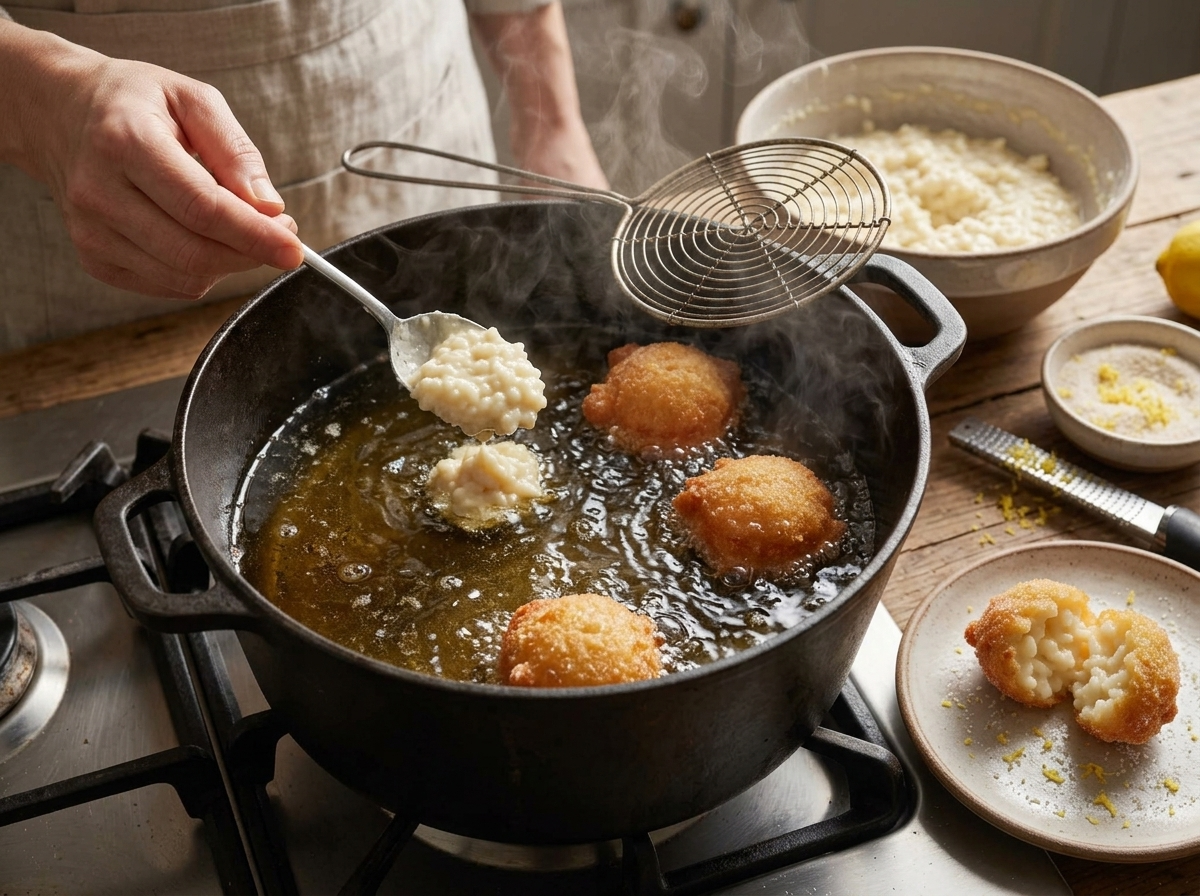
- Pour the frying oil into a 24 cm / 9.5-inch deep pot or dutch oven to a depth of about 5 cm / 2 inches. Heat to 170C / 340F, checking with a deep-fry or instant-read thermometer.
- Scoop rounded tablespoons of batter (a spoon dipped in water helps it release) and slide them gently into the oil, frying 5 to 6 at a time so the temperature doesn't drop.
- Fry for 3 to 4 minutes, turning occasionally with a slotted spoon, until deep golden brown and cooked through in the center.
- Lift the fritters out with the slotted spoon and drain briefly on paper towels.
- While still warm, roll each fritter in the remaining 100 g sugar to coat.
- Let the oil return to 170C / 340F between batches and repeat with the rest of the batter. Serve warm.
Notes
- Cool the rice mixture fully before adding eggs to avoid scrambling.
- Keep oil steady at 170C / 340F; a thermometer beats guessing.
- Fry in batches of 5 to 6 so the temperature doesn't drop.
- Rice base can be made a day ahead and refrigerated overnight.
Tips for Success
- Cool the rice mixture completely before adding eggs, or the residual heat scrambles them.
- Check oil temp with an instant-read thermometer at 170C / 340F between batches, since it drops fast.
- Use Arborio or Carnaroli rice, not long-grain, since the starch is what binds the fritters.
- Scoop batter with a spoon dipped in water so it releases cleanly into the hot oil.
- Roll fritters in sugar right out of the oil, while the surface is still tacky enough to hold it.
Variations
- Swap orange zest for finely chopped candied citron for a more traditional Neapolitan flavor.
- Add a handful of rum-soaked raisins to the batter for a Sicilian-style version.
- Dust with cinnamon sugar instead of plain sugar for a warmer, spiced finish.
Storage and Reheating
Frittelle di riso taste best within a few hours of frying, while the sugar coating still has some crunch. Store leftovers in an airtight container at room temperature for up to 2 days, or in the fridge for up to 4 days.
To bring back some crispness, reheat them in the oven at 180C / 350F for 5 to 6 minutes, uncovered. Skip the microwave, since it turns the sugar coating soft and a bit rubbery.
You can also freeze the fried fritters before rolling them in sugar. Freeze in a single layer until solid, then bag them for up to 2 months. Reheat from frozen in the oven at 180C / 350F for 10 to 12 minutes, then roll in sugar while still warm.
Serving Suggestions
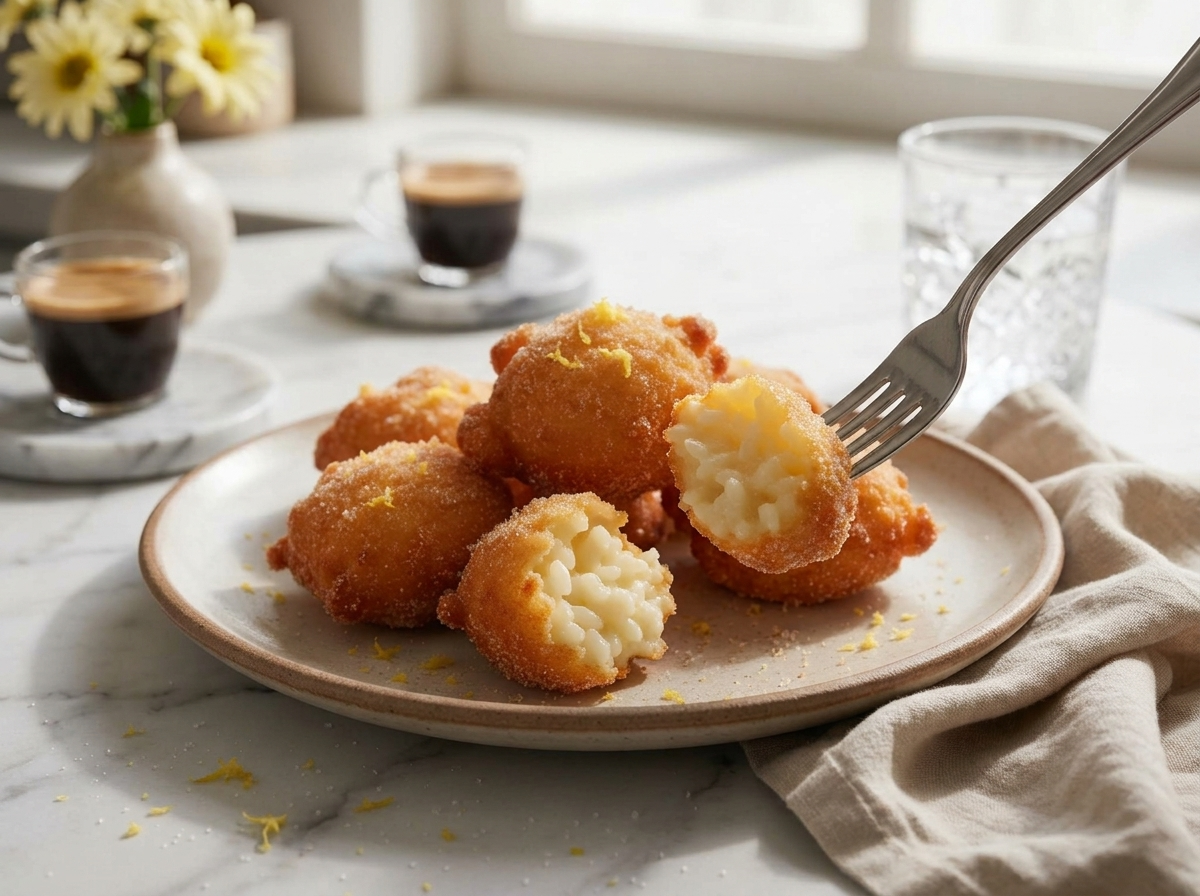
Frittelle di riso di San Giuseppe are traditionally piled on a platter for St. Joseph’s Day, alongside zeppole and other fried sweets. A short espresso or a small glass of sweet Marsala cuts through the sugar well.
For a simpler dessert, skip the platter and just serve them warm in a bowl with extra citrus zest scattered on top.
Leftover fritters, split and toasted lightly, work well crumbled over vanilla gelato.
FAQ
Why are my frittelle di riso greasy instead of crisp?
Greasy fritters usually mean the oil temperature dropped below 170C / 340F, so the batter soaks up oil instead of sealing fast. Fry in batches of 5 to 6, checking the temp with a thermometer between rounds, and let it climb back up before adding more. A too-wet rice base can also cause this, so drain any excess liquid before mixing in the eggs.
Can I use Carnaroli instead of Arborio rice for frittelle di riso?
Yes, Carnaroli works well and holds up through the long simmer in milk just like Arborio does. Avoid long-grain or basmati rice, since they lack the starch that lets the fritters hold their shape once fried. Stick to a short or medium-grain variety sold for risotto.
Can I make the rice base for frittelle di riso a day ahead?
Yes, and it actually helps. Cook the rice in milk, cool it, then refrigerate covered overnight before mixing in the eggs and flour the next day. Cold, firm rice is easier to shape and less likely to spread or soak up extra oil once it hits the pot.
What’s the difference between frittelle di riso and zeppole di San Giuseppe?
Frittelle di riso use a rice and milk base, giving a dense, slightly chewy center, while zeppole di San Giuseppe are made from choux pastry that puffs light and hollow. Both are fried for St. Joseph’s Day on March 19, but zeppole are usually topped with pastry cream and frittelle are simply rolled in sugar.
What goes well with frittelle di riso besides plain sugar?
A dusting of powdered sugar and cinnamon works well, or a small glass of sweet Marsala or espresso on the side. Some cooks drizzle warm honey over the fritters right after frying instead of rolling them in granulated sugar. Serve them warm either way, since they lose their appeal once fully cooled.
Are frittelle di riso di San Giuseppe gluten free?
Not as written, since the batter includes 100 g of all-purpose flour to bind the rice and eggs. A 1:1 gluten-free flour blend swaps in reasonably well, though the texture turns slightly denser. Double check that your baking powder is also labeled gluten free.