Jump to Recipe
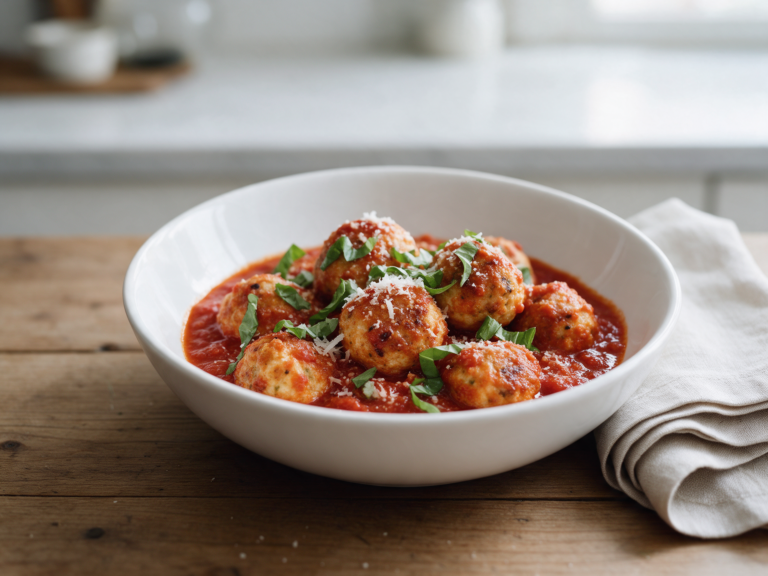
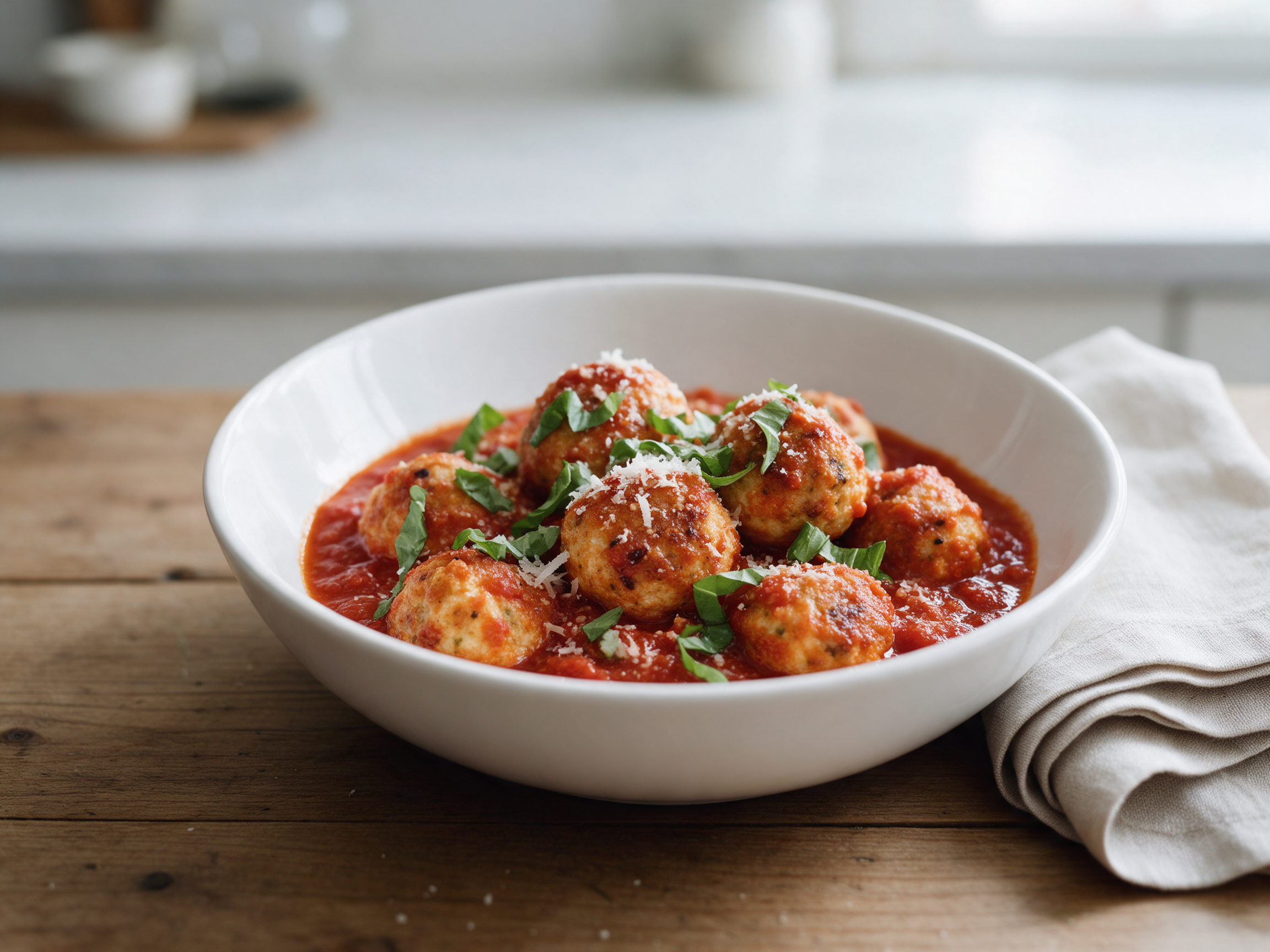
Polpette di ricotta al sugo are meatless meatballs made from ricotta, egg, grated Pecorino and breadcrumbs, browned briefly and simmered in tomato sauce. They take about 65 minutes start to finish, including a 15-minute chill, and serve four.
The texture defines the result. The outside gets a thin golden crust and the inside stays soft and creamy, closer to a tender dumpling than a meat-style meatball. Ricotta polpette turn up in home kitchens across southern Italy, built from cheap fridge staples.
The one thing that goes wrong is wet ricotta. If the mixture looks like thick batter, the balls slump in the pan and fall apart in the sauce. Press the ricotta in a sieve first and the problem mostly disappears.
The sauce is a quick soffritto of onion and carrot with canned tomatoes, and it simmers while the meatballs brown. It’s a practical weeknight dinner, and the leftovers taste better the next day.
Why You’ll Love This Recipe
- Meatless dinner built from ricotta, eggs, and pantry tomatoes
- Golden crust outside, soft and creamy center inside
- Sauce simmers while the meatballs brown, saving time
- Reheats gently and freezes in the sauce for later
Ingredient Notes
- whole-milk ricotta: Choose a tub with little liquid on top and drain it further in a sieve. Part-skim works but gives a drier, firmer meatball.
- plain dry breadcrumbs: Fine, plain crumbs bind best. If you only have panko, crush it between your fingers or pulse it briefly in a blender first.
- Pecorino Romano: Pecorino is sharper and saltier than Parmigiano Reggiano. Either works here, and the salt in the recipe already accounts for the cheese.
- canned whole peeled tomatoes: Crushing whole tomatoes by hand gives a looser, fresher sauce than pre-crushed. Passata (700 g) is an easy substitute, just simmer a few minutes less.
Tender Simmered Polpette di Ricotta in Tomato Sauce
Ingredients
Method
- Spoon the ricotta into a fine-mesh sieve set over a bowl and press with a spatula for 2 minutes to drain. Tip it into a 3-quart / 3 L bowl and add the egg, grated cheese, parsley, garlic, nutmeg, salt and pepper. Stir in the breadcrumbs with a fork until the mixture holds when squeezed. It should be soft and slightly tacky, so add up to 20 g more breadcrumbs, a tablespoon at a time, if it looks like batter.
- Wet your hands and roll the mixture into about 20 balls, roughly 30 g and 4 cm wide each. Roll each ball lightly in the flour and place it on a parchment-lined sheet pan, 33 x 46 cm / 13 x 18 inch. Chill uncovered for 15 minutes, until the balls feel firm to the touch.
- Heat 2 tbsp olive oil in a 28 cm / 11-inch deep saute pan over medium-low heat. Add the onion and carrot and cook for 5 minutes, stirring, until soft and pale gold. Add the sliced garlic for 30 seconds, then crush in the tomatoes by hand and add the salt. Simmer gently, uncovered, for 10 minutes, stirring now and then.
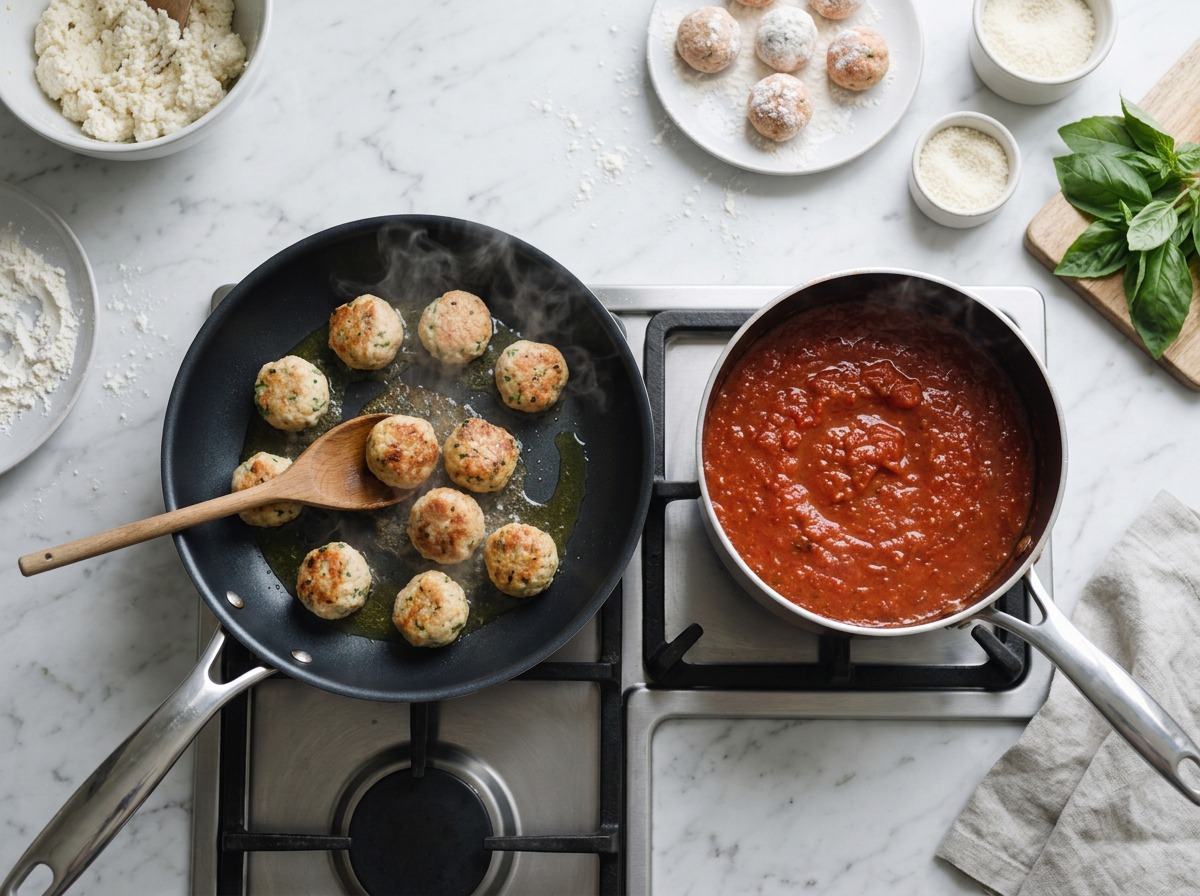
- While the sauce simmers, heat 3 tbsp olive oil in a 26 cm / 10-inch nonstick skillet over medium heat. Brown the meatballs in two batches of 10, 4 to 5 minutes per batch, turning gently with a spoon until a pale golden crust covers most sides. They don't need to cook through. Move each batch to a plate.
- Taste the sauce and adjust the salt. Nestle the browned meatballs into the sauce in a single layer and spoon some sauce over the tops. Lower the heat, set the lid slightly ajar, and simmer for 15 minutes, turning each meatball once at the halfway point. They're ready when firm to a gentle press, hot through at 160 F / 71 C, and the sauce coats the back of a spoon.
- Scatter the basil over the pan and serve right away, with a spoonful of sauce over each portion and a little grated Pecorino on top.
Notes
- Chill the shaped meatballs for 15 minutes before browning so they hold their shape.
- Use whole-milk ricotta, well drained, for a creamy center that still sets.
- Brown in two batches of 10 so the skillet never crowds.
- Simmer at a bare bubble with the lid slightly ajar.
Tips for Success
- Press the ricotta in a fine-mesh sieve for a couple of minutes until it stops dripping, since loose ricotta makes loose meatballs.
- Wet your hands with cold water before rolling so the sticky mixture slides off your palms instead of clinging.
- Brown the meatballs in two batches of 10 so the skillet stays hot and the crust forms instead of steaming.
- Keep the sauce at a bare simmer once the meatballs go in, with small bubbles breaking only at the edges.
- Taste the sauce before adding the meatballs and season then, since the Pecorino adds salt as they simmer.
Variations
- Add 1 tsp dried oregano and a pinch of chili flakes to the sauce for gentle arrabbiata-style heat.
- Swap the tomato sauce for 120 ml vegetable stock and 2 tbsp butter, simmering the browned meatballs 8 minutes until glossy.
- Bake the shaped meatballs at 200 C / 400 F for 18 minutes on parchment, then warm them in the sauce for 5 minutes.
Storage and Reheating
Store leftover polpette di ricotta in their sauce in an airtight container in the fridge for 3 to 4 days. The meatballs soften a little as they sit, which suits the sauce well.
Reheat in a covered saucepan over low heat for 8 to 10 minutes with a splash of water, until the sauce bubbles gently at the edges and the meatballs are hot through at 160 F / 71 C. Skip high heat, which tightens the ricotta and dries the crust.
To freeze, cool everything completely and pack the meatballs in the sauce in a sealed container for up to 2 months. Thaw overnight in the fridge before reheating.
Serving Suggestions
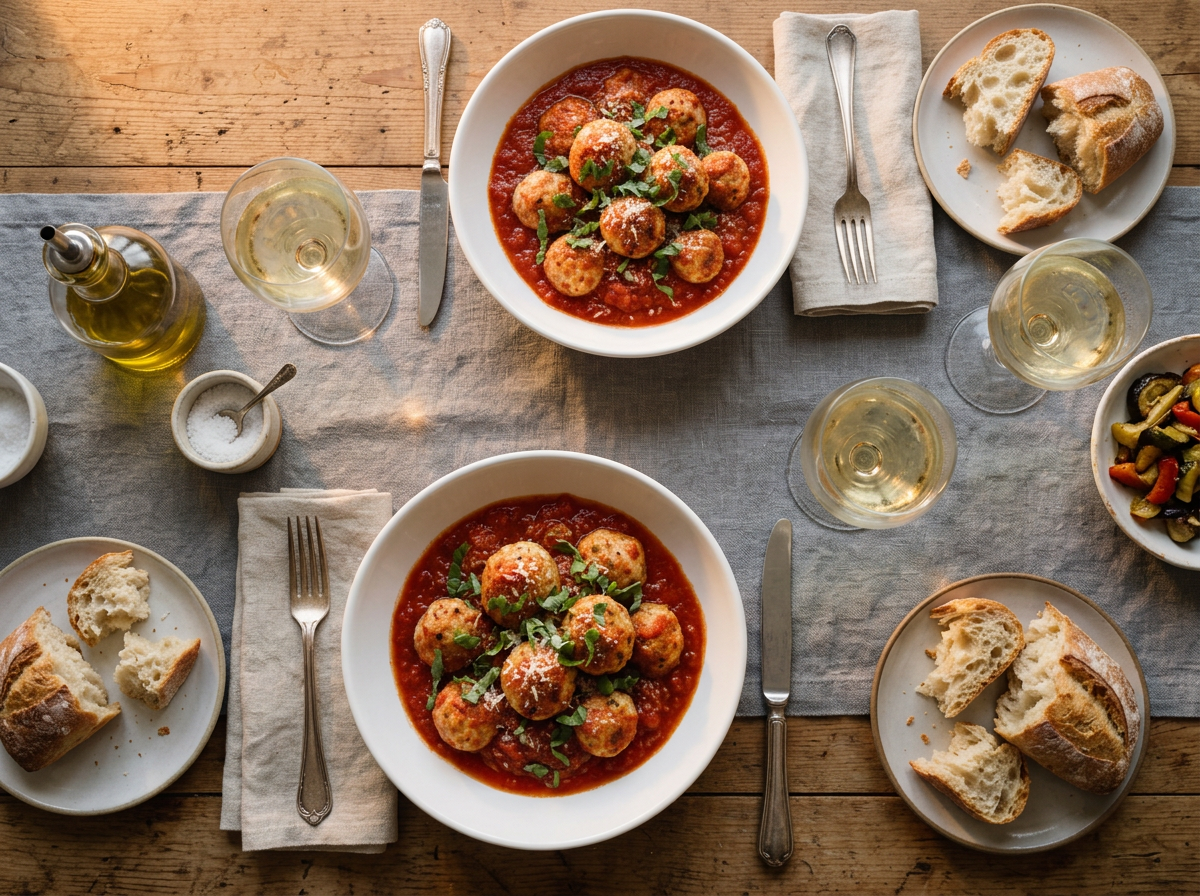
Serve polpette di ricotta al sugo hot, straight from the pan, with a spoonful of sauce over each portion and a little grated Pecorino on top.
Crusty bread is the usual partner, and you’ll want it for the sauce. For a fuller dinner, spoon the meatballs over short pasta such as rigatoni or beside soft polenta.
A bitter green salad, like chicory or rocket with lemon and olive oil, balances the cheese. Roasted zucchini or sauteed broccoli rabe also work.
FAQ
Why are my polpette di ricotta falling apart in the sauce?
Loose ricotta is the usual cause. Drain it in a sieve until it stops dripping, chill the shaped balls for 15 minutes, and brown them before they go into the sauce. Then keep the sauce at a bare simmer, because hard boiling breaks the soft centers apart.
Can I use part-skim ricotta instead of whole-milk for ricotta meatballs?
Yes, but the meatballs turn out slightly drier and firmer. Part-skim ricotta also tends to hold more water, so drain it for longer, then add 1 tbsp of olive oil to the mixture. Avoid fat-free ricotta, which turns rubbery. Whole-milk is still my first choice.
Can I freeze polpette di ricotta al sugo?
Yes, they freeze well in the sauce for up to 2 months. Cool them fully, pack in a sealed container with the sauce covering the meatballs, and thaw overnight in the fridge. Reheat gently over low heat for 8 to 10 minutes so the ricotta stays soft.
What goes well with polpette di ricotta al sugo for dinner?
Crusty bread, short pasta like rigatoni, or soft polenta all soak up the sauce well. For something lighter, add a chicory or rocket salad dressed with lemon and olive oil. The bitter greens cut through the creamy ricotta. Plan on 5 meatballs per person with the sauce.
Are ricotta meatballs in tomato sauce vegetarian?
They’re meat-free, but not automatically vegetarian. Pecorino Romano and Parmigiano Reggiano are traditionally made with animal rennet, so check the label or use a hard cheese made with microbial rennet. The recipe also contains egg, so it isn’t suitable for vegans either.
What’s the difference between polpette di ricotta and ricotta gnudi?
Polpette di ricotta are bound with egg and breadcrumbs, browned in a skillet, then simmered in sauce. Gnudi are mostly ricotta with a little flour or semolina, gently poached in water and served with butter or a light sauce. Polpette are firmer and sturdier, which is why they hold up in a sugo.