
Jump to Recipe
Seupa a la vapelenentse is a baked bread and cabbage casserole from the Aosta Valley, built in layers with stale bread, blanched savoy cabbage, and sliced Aosta fontina, then soaked in hot beef broth and baked until the top turns golden. It comes from Valpelline, a small village in the mountains, where cooks needed a way to stretch stale bread and winter cabbage into something substantial, much like the Valtellina bread soup tradition.
The dish sits somewhere between a soup and a casserole. Once it comes out of the oven, the broth has mostly disappeared into the bread, and you cut it into squares instead of ladling it into bowls.
Fontina from the Aosta Valley melts into long strands rather than turning oily, which is what gives this dish its texture. Cabbage that’s blanched just long enough keeps a little bite under all that melted cheese and broth, the same way it holds its texture in a savoy cabbage risotto.
One thing that trips people up: pour all the broth in at once and the bottom layer turns to mush before the top even soaks through. Add it in stages instead, and give the bread time to drink it in.
Why You’ll Love This Recipe
- Turns stale bread and cabbage into a filling one-dish meal
- Fontina melts into strands instead of pooling greasy
- Assembles ahead so dinner is just a bake away
- Feeds a table for the cost of a few pantry staples
Ingredient Notes
- stale bread: Use a dense country or rye loaf that’s at least a day old so it soaks up broth without turning to paste. Dry out fresh bread in a low oven for 15 minutes if that’s all you have.
- savoy cabbage: Blanch until just tender so it keeps a little bite under the broth and cheese. Regular green cabbage works but savoy’s crinkled leaves hold their shape better.
- Fontina Valle d’Aosta DOP: Gives the dish its long, stretchy melt and mild, buttery flavor. Gruyere or young fontal both work as a substitute, though they melt a bit sharper.
- beef broth: Traditional and gives the dish depth. Swap in vegetable broth for a vegetarian version without changing the technique.
- unsalted butter: Melted and drizzled over the layers and top, it helps the cheese brown instead of drying out. Adjust salt if you only have salted butter on hand.
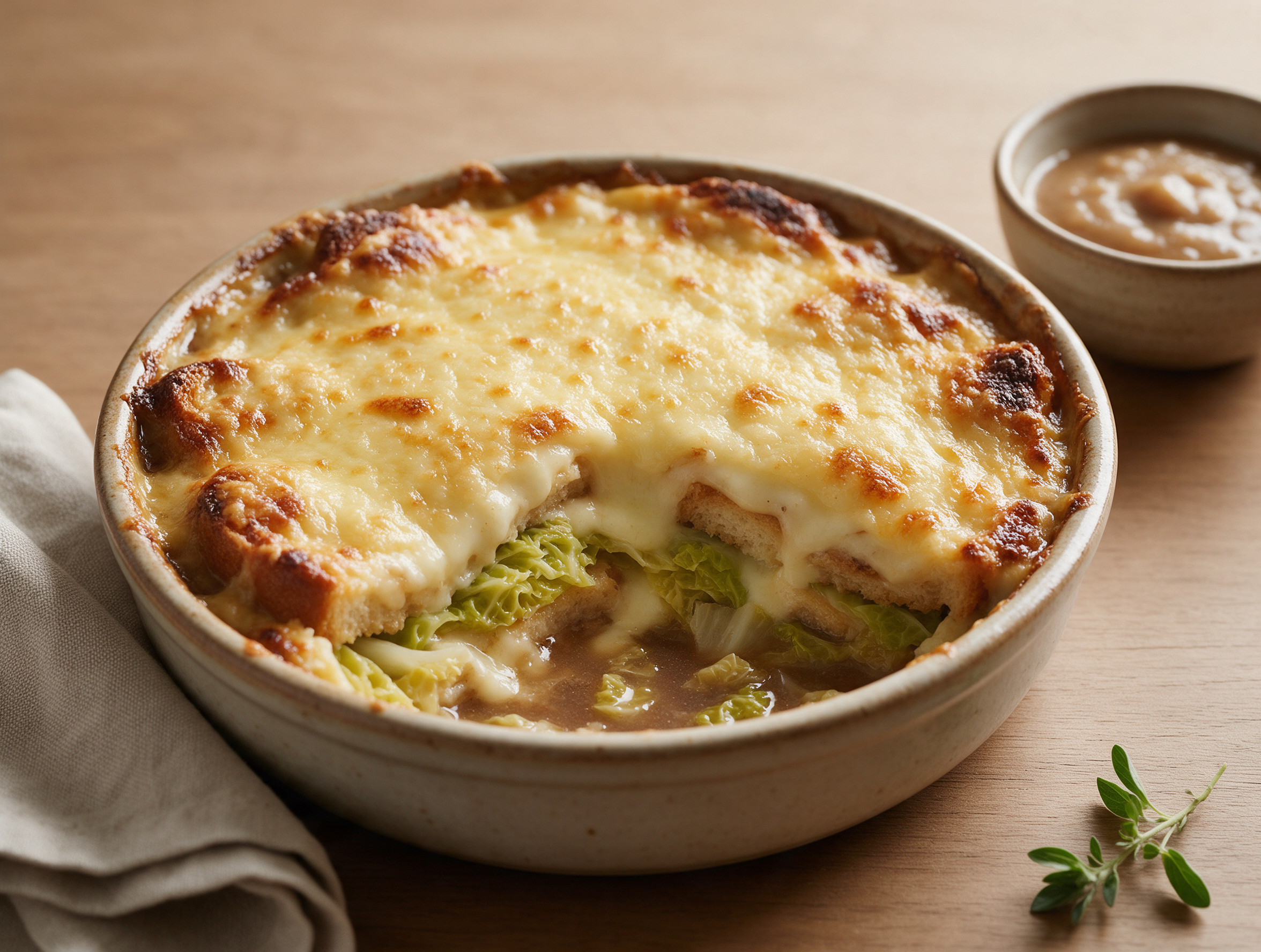
Baked Seupa a la Vapelenentse with Aosta Fontina
Ingredients
Method
- Preheat the oven to 180 C / 356 F. Butter a 24 x 33 cm / 9 x 13 inch baking dish with a little of the melted butter.
- Bring a 5-quart / 4.7 L pot of water seasoned with fine salt to a boil. Add the shredded savoy cabbage and blanch for 5 to 6 minutes until just tender but not limp. Drain well in a colander and press out excess water.
- In a 2-quart / 1.9 L saucepan, heat the beef broth with the bay leaf until steaming hot, not boiling. Remove the bay leaf and stir in the nutmeg if using.
- Line the bottom of the prepared dish with a layer of the stale country or rye bread, sliced 1.5 cm thick, cutting pieces to fit snugly.
- Scatter a third of the blanched cabbage over the bread, then cover with a third of the sliced fontina. Grind black pepper over the layer.
- Repeat the layering two more times, bread then cabbage then fontina, finishing with a layer of fontina on top.
- Pour the hot broth slowly and evenly over the layers in two or three additions, pausing between pours to let the bread absorb it before adding more. The bread should be soaked through but not swimming in liquid.
- Drizzle the remaining melted butter over the top layer of cheese.
- Bake for 45 to 50 minutes until the top is golden brown and the broth is mostly absorbed into the layers.
- Rest the casserole for 10 minutes before cutting into squares or scooping into bowls. Serve hot.
Notes
- Use bread that's at least a day old, or dry fresh slices in a low oven first.
- Pour broth in stages so the bottom layer doesn't turn to mush.
- Let the casserole rest 10 minutes before cutting into squares.
- Swap beef broth for vegetable broth to make it vegetarian.
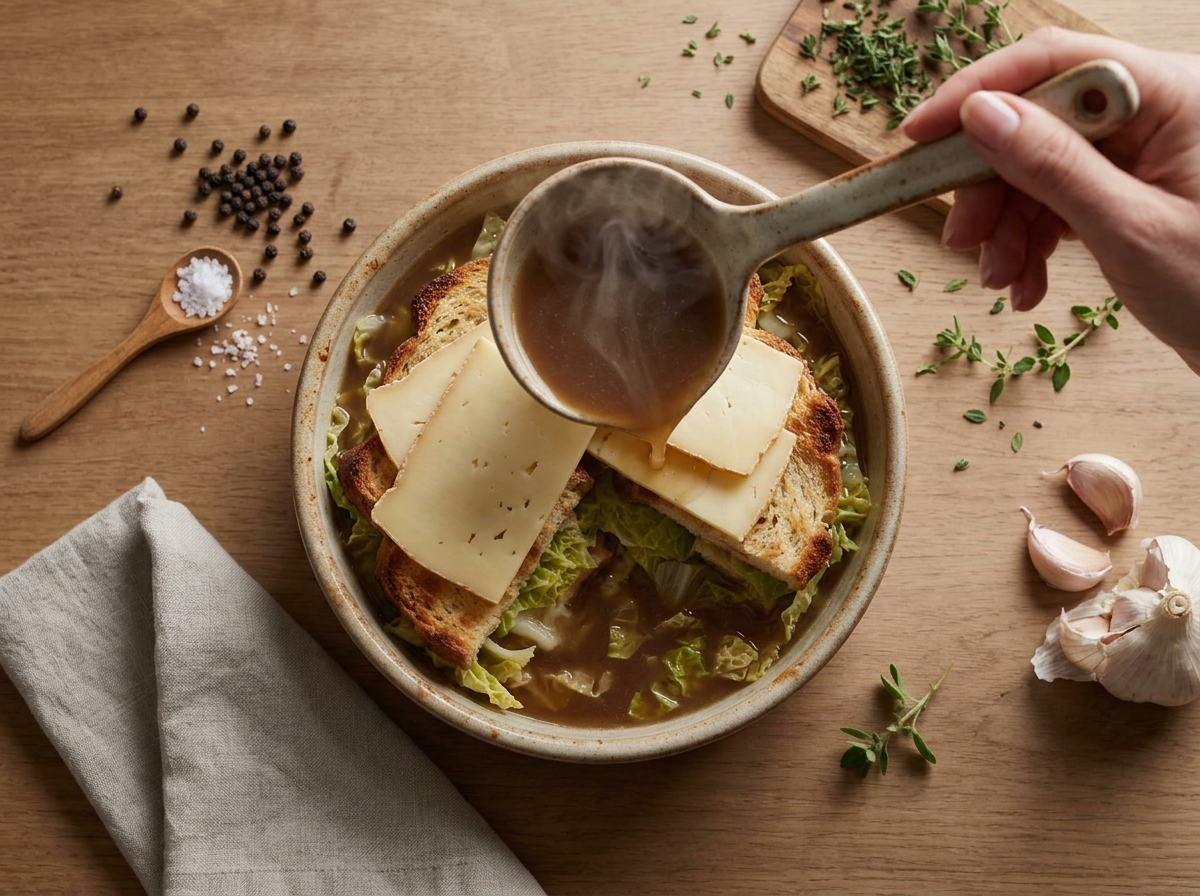
Tips for Success
- Dry out fresh bread in a low oven for 15 minutes if it isn’t already stale, so it holds up under the broth.
- Blanch the cabbage for exactly 5 to 6 minutes so it stays slightly toothy after baking, the same timing that keeps cabbage tender-crisp in busecca milanese.
- Layer fontina between every bread layer, not just on top, so it melts through the whole dish.
- Pour broth in stages and let each addition soak in before adding more, so the bottom doesn’t turn soggy.
- Rest the baked casserole for 10 minutes before cutting so the layers set instead of collapsing.
Variations
- Swap beef broth for vegetable broth and use a vegetable bouillon for a vegetarian version with the same texture.
- Add a thin layer of grated Parmigiano Reggiano between the fontina layers for a sharper, saltier finish.
- Use rye bread instead of a plain country loaf for a denser, more rustic result that holds up longer in the oven.
Storage and Reheating
Seupa a la vapelenentse keeps for 3 to 4 days in the fridge, covered tightly once it’s cooled to room temperature. Reheat individual portions in a 180C/350F oven for 15 to 20 minutes, covered loosely with foil, until warmed through and the cheese softens again.
You can freeze baked portions for up to 2 months in an airtight container. Thaw overnight in the fridge before reheating in the oven, since the bread texture holds up better than after a microwave reheat.
Serving Suggestions
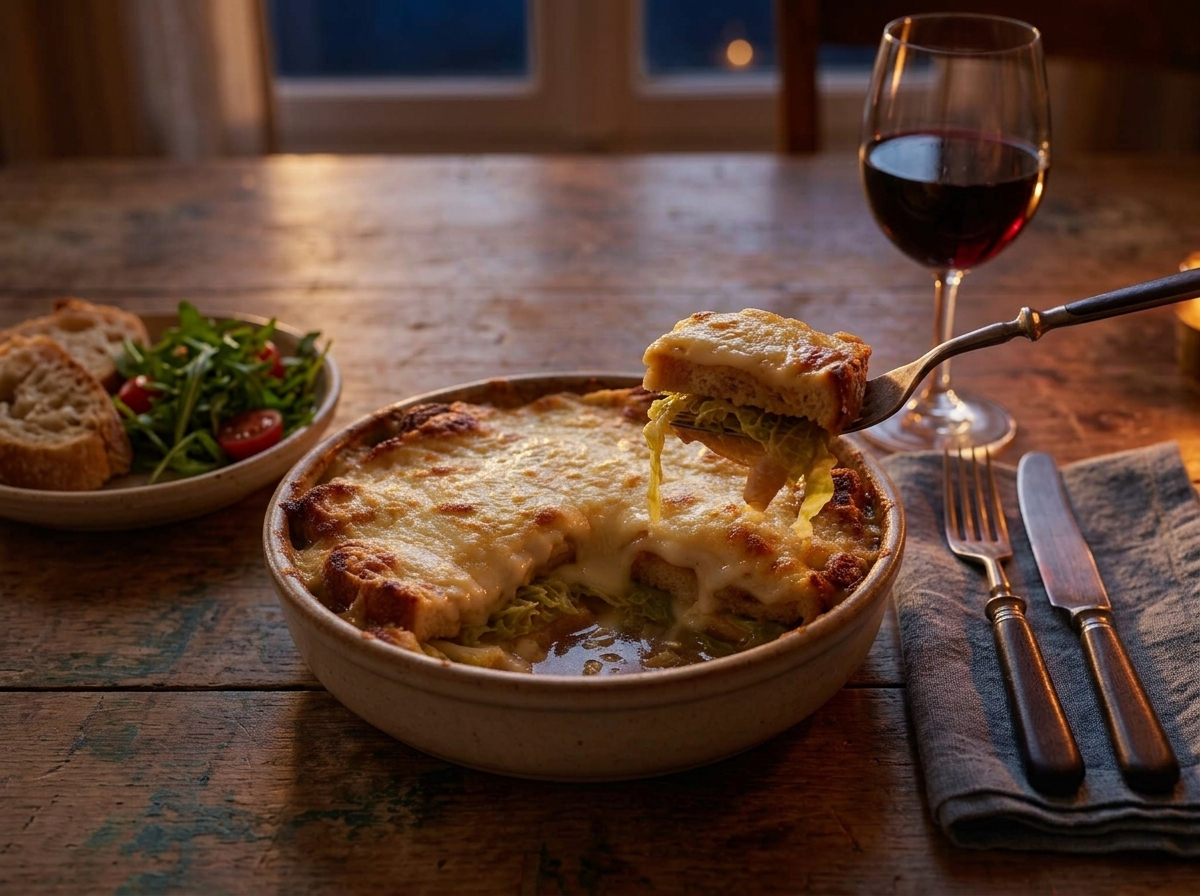
Seupa a la vapelenentse works as a full meal on its own, since bread, cheese, and vegetable are all built into the dish. A crisp green salad with a sharp mustard vinaigrette on the side cuts through the richness of the melted fontina.
Pour a light red from the Aosta Valley, like Torrette, or a simple Beaujolais if that’s easier to find. Both have enough acidity to balance the butter and broth.
Pickled vegetables, giardiniera style, add a sharp contrast if you want something to break up each bite.
FAQ
Why is my seupa a la vapelenentse soupy instead of set?
Too much broth added at once, or skipping the rest before cutting, both leave it wet instead of sliceable. Pour broth in two or three additions, checking after each pour, and let the dish sit for 10 minutes out of the oven before serving so the bread finishes absorbing.
Can I use gruyere instead of Aosta fontina in seupa a la vapelenentse?
Yes, gruyere is a reasonable stand-in and melts with a similar stretch, though it tastes sharper than true Fontina Valle d’Aosta DOP. Young fontal or a mild taleggio also work if you want to stay closer to the soft, buttery character of the original.
Can I make seupa a la vapelenentse ahead of time?
You can assemble the bread, cabbage, and fontina layers up to a day ahead and refrigerate, covered, before pouring on the hot broth just before baking. This keeps the bread from turning soggy in the fridge and gives you a real head start on a weeknight.
What goes well with seupa a la vapelenentse?
A crisp green salad with a sharp vinaigrette cuts through the richness of the melted fontina and butter. A glass of light Valle d’Aosta red like Torrette works well, and a side of pickled vegetables adds the acidity the dish needs.
Is seupa a la vapelenentse gluten free?
No, the traditional version isn’t gluten free since it’s built on layers of bread. You can rebuild it with a dense gluten-free loaf, though the texture changes since gluten-free bread tends to break down faster once soaked in hot broth.
What’s the difference between seupa a la vapelenentse and French onion soup?
Seupa a la vapelenentse uses cabbage and fontina layered with bread and baked until mostly set, while French onion soup stays liquid with caramelized onions and a floating cheese-topped crouton. The Aosta dish is closer to a casserole than a soup you’d ladle and drink.