
Jump to Recipe
Pizza ortolana is a vegetable pizza from Italian home cooking, topped with zucchini, eggplant, bell pepper, and cherry tomatoes over melted mozzarella. The name comes from ortolano, the greengrocer, so this is really whatever your vegetable drawer looks like in late summer.
I roast the vegetables separately before they go on the dough. Skip that step and you get a soggy crust in the middle, because raw zucchini and eggplant release a lot of water as they bake.
The dough is a simple same-day yeast dough, unlike the long cold ferment used for pizza bianca romana dough, though it does need about 90 minutes to rise. I bake at 250 C / 480 F on a preheated pizza stone, which gets the crust properly blistered in 8 to 10 minutes.
This one is forgiving on vegetable choice. Swap in whatever’s ripe and the technique stays the same.
Why You’ll Love This Recipe
- Roasting vegetables first keeps the crust from going soggy
- Dough comes together same-day, no overnight ferment needed
- Flexible with whatever vegetables are in season
- Feeds four with make-ahead dough options for busy weeknights
Ingredient Notes
- bread flour: Higher protein than all-purpose gives a chewier crust. You can use 00 flour instead if you want a slightly softer edge.
- instant yeast: Instant yeast goes straight into the flour mix in most recipes, but here I bloom it in water first to double check it’s active.
- eggplant: Salt the slices and let them sit 10 minutes before roasting if you want to pull out extra bitterness and moisture.
- fresh mozzarella: Tear it by hand instead of slicing so it melts into pockets rather than one flat layer. Low-moisture mozzarella works too and browns a bit more.
- tomato passata: Plain strained tomato works as a substitute if you can’t find passata. Just thin it with a spoon of water if it’s very thick.
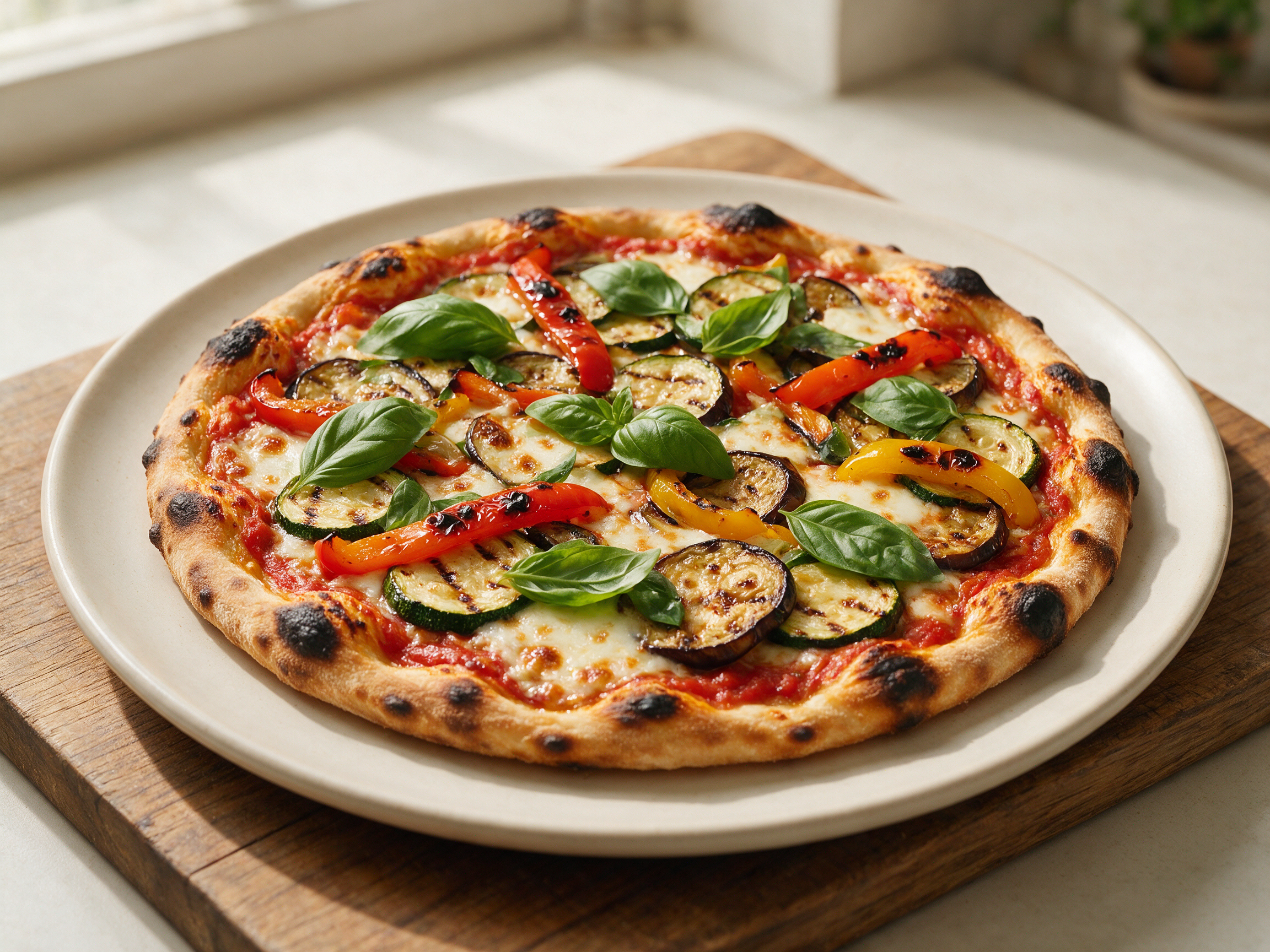
Oven-Baked Pizza Ortolana with Fresh Garden Vegetables
Ingredients
Method
- Combine the warm water (40 C / 105 F) and instant yeast in a small bowl. Let it sit for 5 minutes until foamy.
- In a large mixing bowl, whisk the flour and salt together. Make a well and pour in the yeast mixture and olive oil.
- Mix with a spoon then your hands until a shaggy dough forms. Turn onto a lightly floured counter and knead for 8 to 10 minutes until smooth and elastic.
- Shape into a ball, place in an oiled bowl, cover with plastic wrap, and let rise for 60 to 90 minutes until doubled.
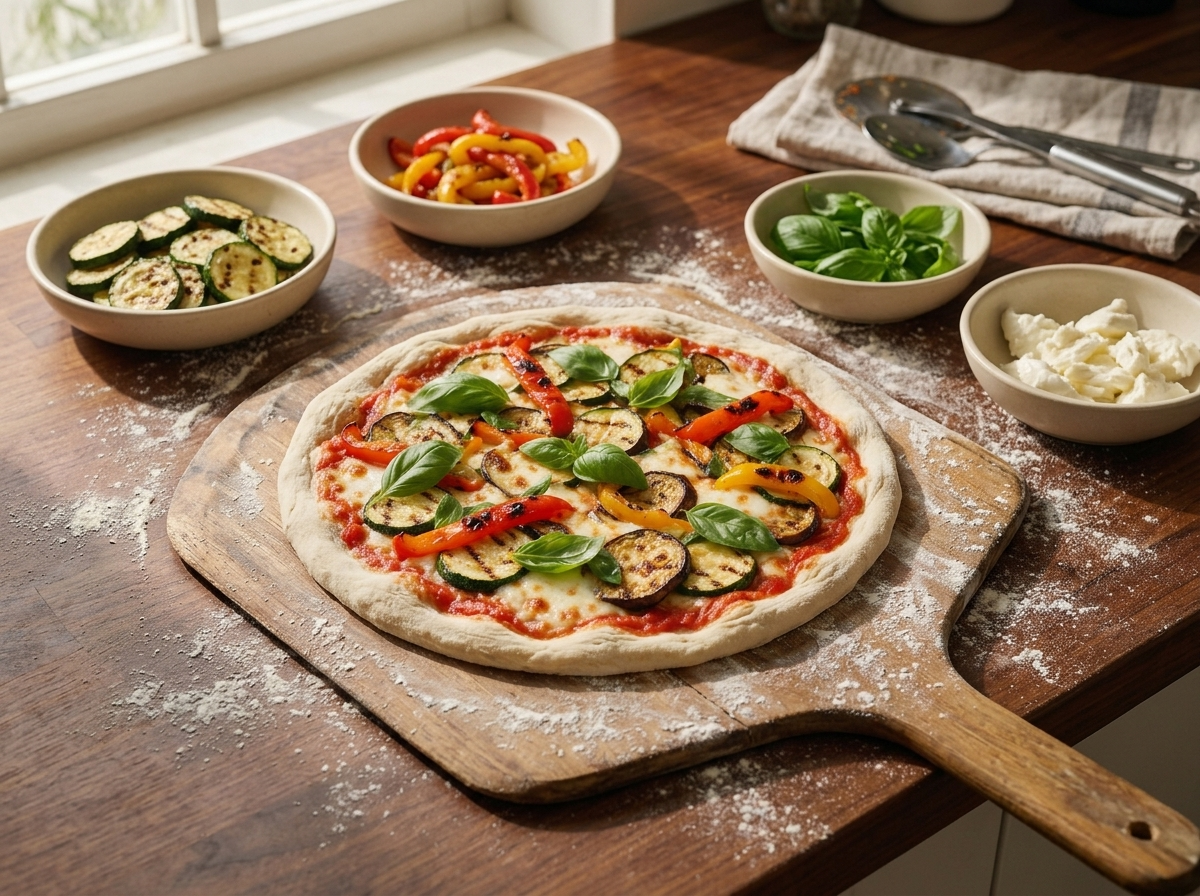
- Heat the oven to 220 C / 430 F. On a sheet pan 33 x 46 cm / 13 x 18 inch, toss the zucchini, eggplant, peppers, and red onion with the 45 ml / 3 tbsp olive oil, salt, and pepper.
- Roast for 18 to 20 minutes, turning once, until the edges char slightly and the vegetables are tender.
- Stir the minced garlic into the tomato passata with a pinch of salt. Set aside.
- About 45 minutes before baking, heat the oven to 250 C / 480 F with a pizza stone, or an inverted sheet pan, on the middle rack.
- Punch down the dough and divide it into 2 equal balls. On a floured surface, stretch each into a 30 cm / 12-inch round.
- Spread a thin layer of the garlic passata over each round, leaving a 2 cm border. Scatter torn mozzarella, roasted vegetables, and cherry tomato halves on top.
- Slide one pizza onto the hot stone using a peel or the back of a sheet pan. Bake for 8 to 10 minutes, until the crust is blistered with dark leopard spots and the cheese bubbles. Repeat with the second pizza.
- Scatter fresh basil over the hot pizzas, drizzle with olive oil, and add chili flakes if using. Slice and serve right away.
Notes
- Roast vegetables before topping the pizza, never add them raw.
- Preheat the pizza stone a full 45 minutes for a properly blistered crust.
- Tear mozzarella by hand rather than slicing for better melt.
- Dough can be refrigerated up to 24 hours after the first rise.
- Bake one pizza at a time so the stone stays hot enough.
Tips for Success
- Salt the eggplant slices and let them sit 10 minutes before roasting to draw out excess moisture.
- Preheat the pizza stone for a full 45 minutes so the crust gets a blistered bottom in under 10 minutes.
- Tear the mozzarella instead of slicing it so it melts into pockets rather than one solid layer.
- Weigh the flour instead of scooping cups if you want the dough texture consistent every time.
- Stretch the dough by hand instead of a rolling pin to keep the air bubbles that give a chewy edge.
Variations
- Add a handful of baby arugula and shaved Parmesan right after the pizza comes out of the oven for a peppery finish.
- Swap the mozzarella for burrata, torn over the pizza in the last minute of baking so it stays soft and runny.
- Use whole wheat flour for half the flour weight for a nuttier crust with more chew.
Storage and Reheating
Pizza ortolana keeps in the fridge for 3 to 4 days once fully cooled, wrapped or in an airtight container.
Reheat slices in a 220 C / 430 F oven directly on the rack or a sheet pan for 5 to 6 minutes, until the crust re-crisps and the cheese loosens again. A covered skillet on medium-low for about 4 minutes works too and keeps the bottom crisp. Skip the microwave, it leaves the crust rubbery.
The raw dough freezes well for up to 1 month if you want to prep ahead. Thaw it in the fridge overnight, then let it sit at room temperature for 30 minutes before stretching.
Serving Suggestions
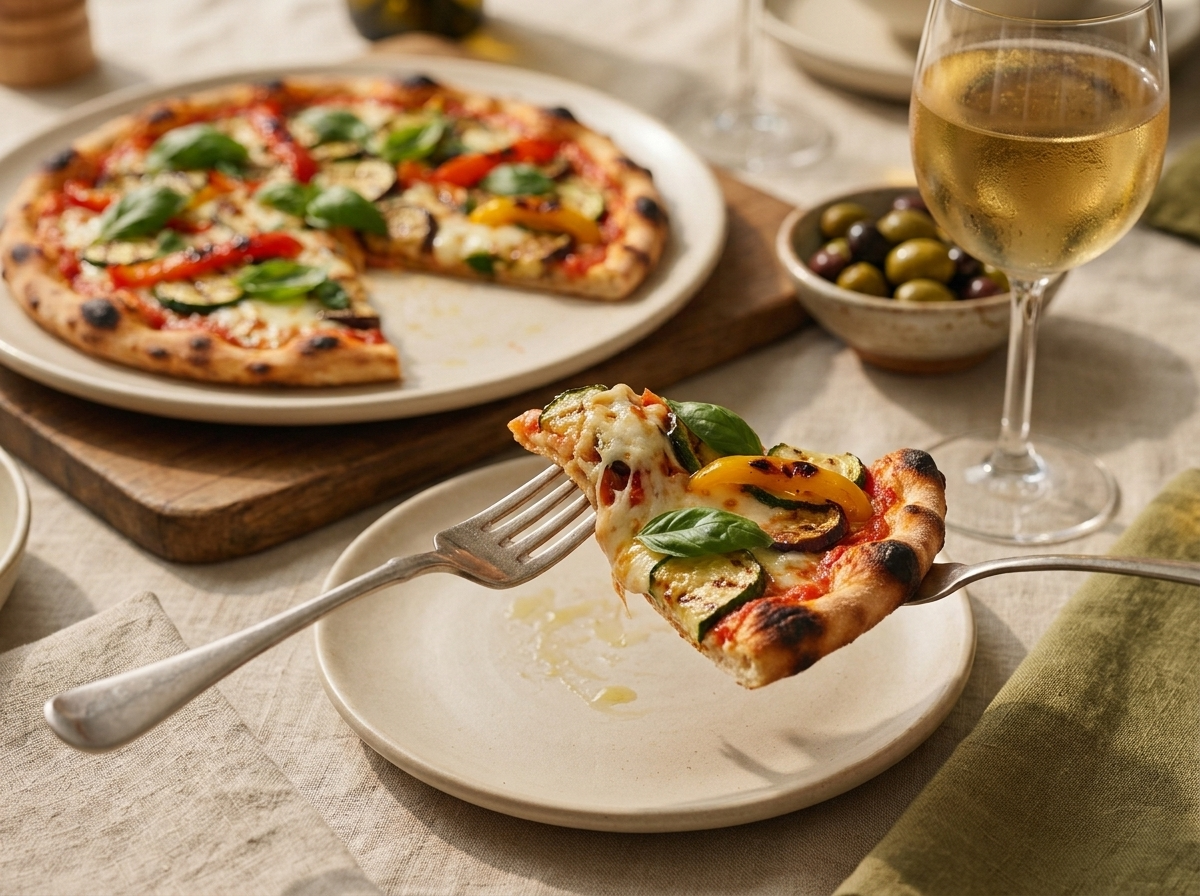
Pizza ortolana works as a full dinner on its own, especially with a simple green salad dressed in lemon and olive oil to balance the char on the vegetables.
For a bigger spread, put out a small antipasto board with olives, tender carciofi ripieni, and a wedge of Parmesan alongside the pizza.
Pour a chilled Vermentino or Pinot Grigio, or keep it simple with sparkling water and a squeeze of lemon.
FAQ
Why is my pizza ortolana soggy in the middle?
Your crust turns soggy when the zucchini and eggplant go on raw, since they release water as they bake and steam the dough underneath. Roast the vegetables separately at 220 C / 430 F for 18 to 20 minutes first, so most of that moisture cooks off before they touch the crust.
Can I use different vegetables instead of eggplant in pizza ortolana?
Yes, pizza ortolana is meant to flex with whatever’s in season. Mushrooms, asparagus, or thin potato slices all roast well using the same 220 C / 430 F method, just watch potato slices closely since they need closer to 25 minutes to soften through.
Can I make the pizza ortolana dough ahead of time?
Yes, the dough holds well in the fridge. After the first rise, punch it down, wrap it tightly, and refrigerate for up to 24 hours, or freeze the dough balls for up to 1 month and thaw overnight in the fridge before stretching.
What wine goes with pizza ortolana?
A light, high-acid white like Pinot Grigio or Vermentino works well, since it cuts through the melted mozzarella without overpowering the roasted vegetables. A chilled young Chianti or Barbera is a good red option too, and a simple arugula salad on the side keeps the meal balanced.
Is pizza ortolana vegetarian, and can I make it vegan?
Pizza ortolana is vegetarian as written, since the only animal product is the mozzarella. To make it vegan, swap in a plant-based mozzarella alternative or skip the cheese and finish with extra olive oil and basil after baking, since dairy-free shreds melt best added earlier in the bake.
What’s the difference between pizza ortolana and pizza primavera?
Pizza ortolana usually means the vegetables are roasted or grilled before baking, giving a deeper, slightly charred flavor. Pizza primavera leans toward lighter, sometimes barely-cooked spring vegetables added straight to the pizza. Both are vegetable pizzas, but ortolana reads heartier and more late-summer than primavera’s spring focus.