Jump to Recipe
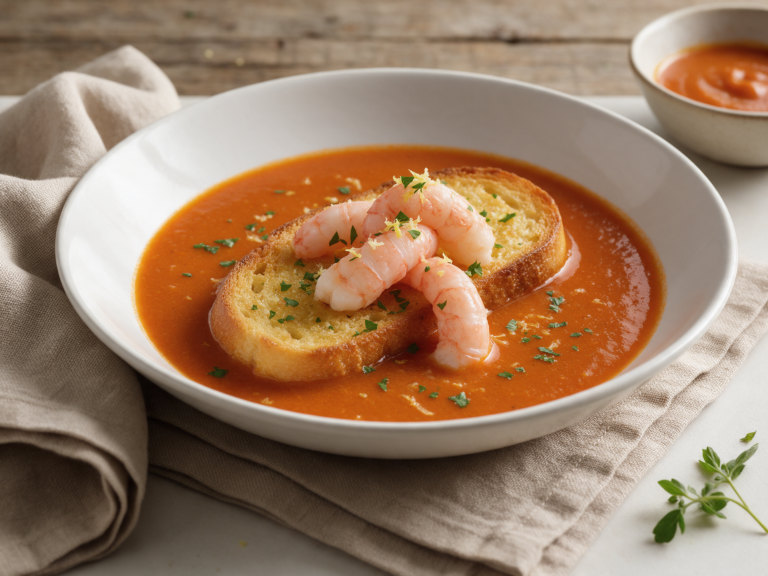
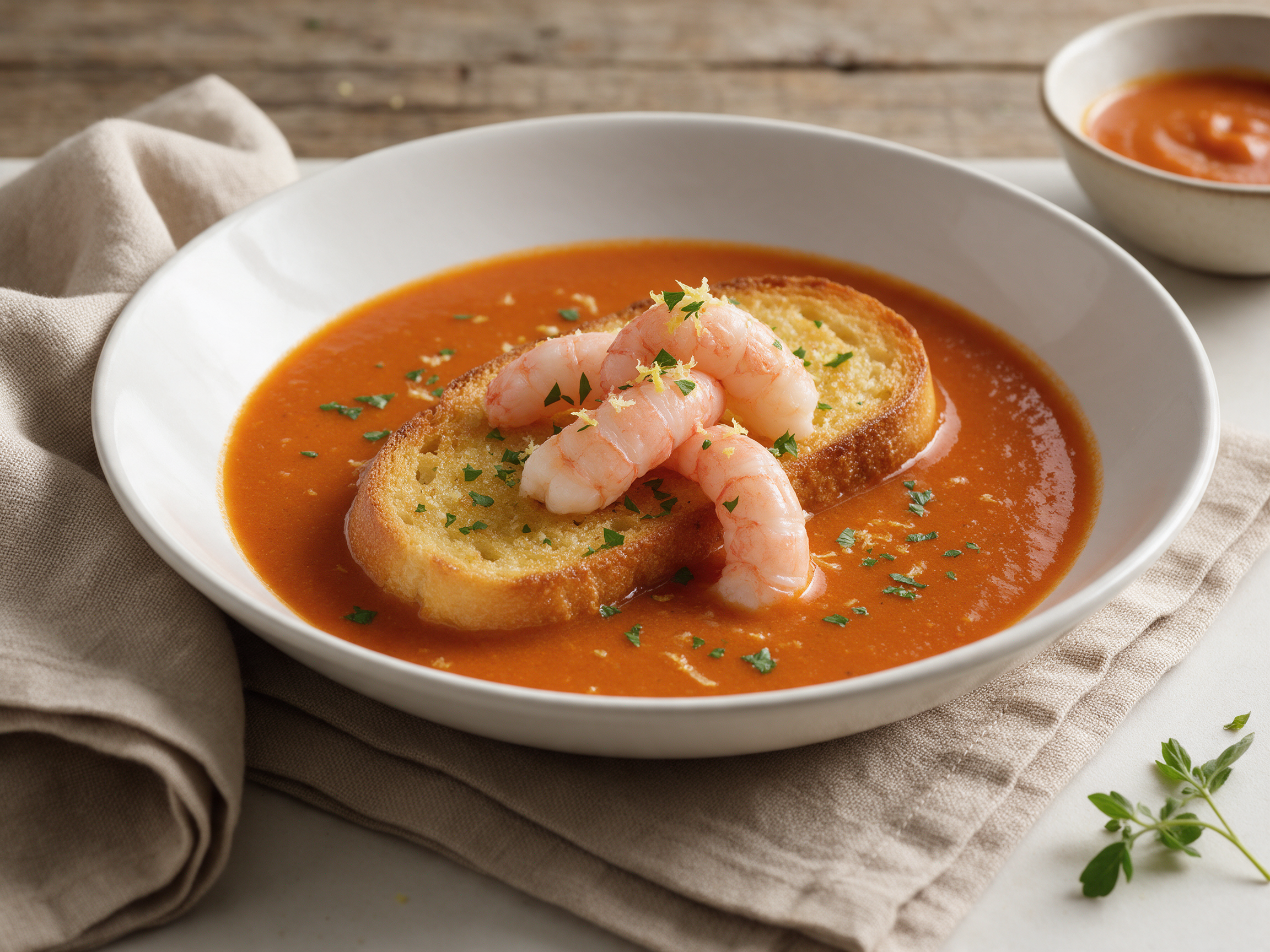
Zuppa di scampi is an Italian langoustine soup built on a stock made from the shells and heads, then finished with the peeled tails for just 2 minutes. The tomato-red broth tastes of the sea rather than of tomato.
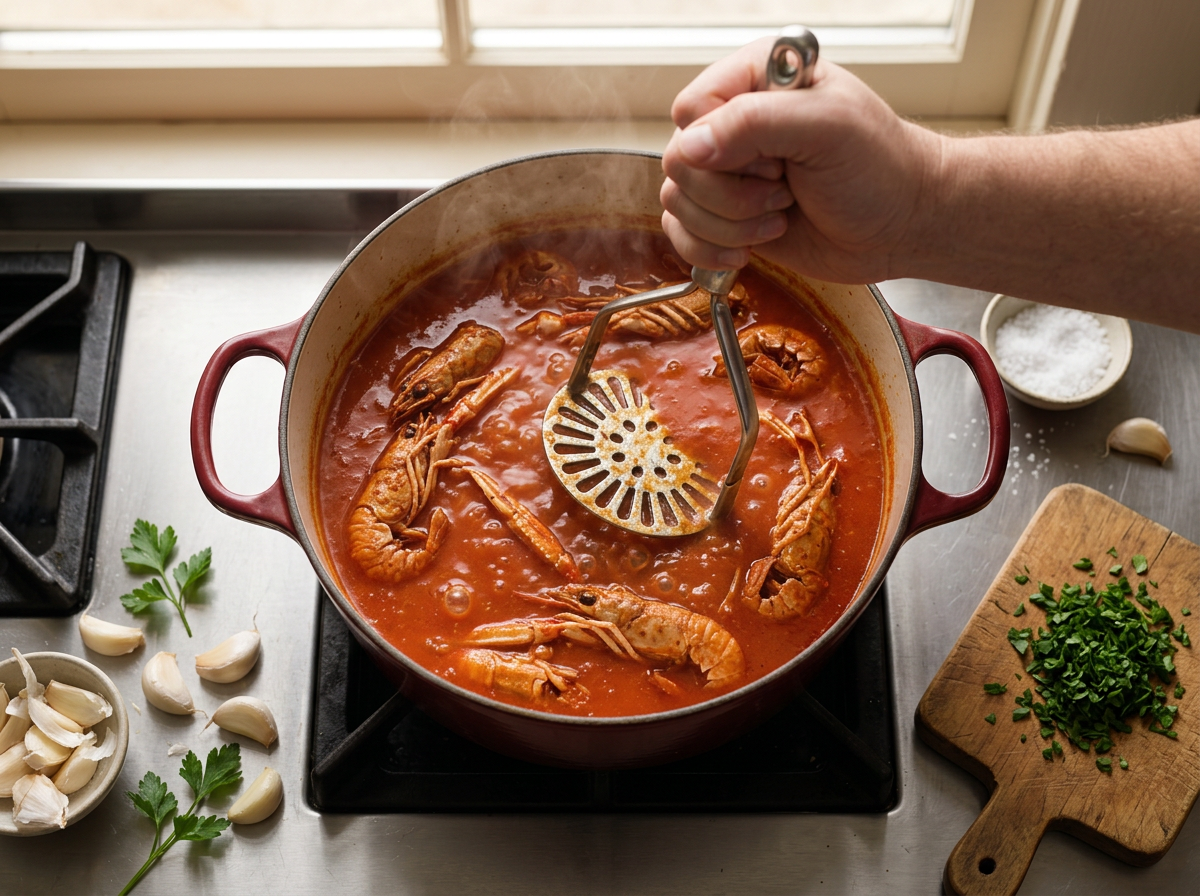
The shells do the heavy lifting. You brown them with a soffritto, deglaze with white wine, simmer for 25 minutes, then mash and strain. That’s where the body comes from. No cream is needed.
Total time is about 80 minutes, and most of it is hands-off simmering. The stock can be made up to 3 days ahead, which turns the final step into a 5-minute job.
The one judgment call is the tails. Two minutes in a gentle simmer and they’re tender. Push them past 3 minutes and they turn rubbery.
Why You’ll Love This Recipe
- Silky broth with no cream, only shells and tomato
- Tails cook for just 2 minutes, so they stay tender
- Stock keeps 3 days, so dinner finishes in minutes
- Soffritto, wine, and tomato paste layer depth without a long list
Ingredient Notes
- Langoustines: Italians call them scampi. Frozen, head-on langoustines work well, thawed overnight in the fridge. Buy ones that smell of clean sea, because enzymes in the head soften the meat quickly. Skip any with blackened heads or an ammonia smell, keep them cold, and cook within a day of thawing.
- Tomato paste: Two tablespoons add color and a roasted edge to the shell stock. Cook it for a full minute before adding the wine so it loses its raw taste.
- Dry white wine: Use something you’d drink, such as Vermentino or Pinot Grigio. Without wine, use 120 ml of water plus 2 tsp lemon juice.
- Ciabatta: Day-old bread holds up better under the broth. Any sturdy country loaf works, or use gluten-free bread for a gluten-free bowl.
Zuppa di Scampi: Italian Langoustine Soup with Tomato
Ingredients
Method
- Twist the heads off the langoustines. Peel the tails, remove the dark intestinal line with the tip of a knife, and refrigerate the tails, covered. Keep every head and shell for the stock. Finely chop the onion, celery, and carrot, and slice the garlic.
- Heat 3 tbsp olive oil in a 4-quart / 3.8 L heavy-bottomed pot over medium heat. Add the onion, celery, and carrot and cook for 8 minutes, stirring, until soft and pale gold. Add the garlic and chili flakes and cook for 1 minute.
- Raise the heat to medium-high and add the heads and shells. Cook for 6 to 8 minutes, pressing with a wooden spoon, until they turn deep orange and smell sweet. Stir in the tomato paste for 1 minute, pour in the wine, and scrape up the browned bits. Let it bubble for 2 minutes until the sharp alcohol smell fades.
- Crush the tomatoes by hand into the pot and add the water and parsley stems. Bring to a simmer, reduce the heat to low, and cook partly covered for 25 minutes. While it simmers, heat the oven to 220 C / 425 F. Bake the ciabatta on a 33 x 46 cm / 13 x 18 inch sheet pan for 5 to 6 minutes, flipping once, until golden at the edges. Rub with the halved garlic clove and drizzle with 2 tbsp olive oil.
- Mash the shells firmly with a potato masher for 1 to 2 minutes to release their juices. Set a 20 cm / 8-inch fine-mesh sieve over a bowl, pour in the contents of the pot, and press hard with a ladle until the shells are dry. Discard the shells. Rinse the pot and pour the stock back in. You should have about 1 liter.
- Bring the stock to a gentle simmer over medium heat. Season with 1 tsp fine sea salt and taste. Add the tails and cook for 2 minutes, until the flesh turns opaque and feels just firm (145 F / 63 C). Don't go past 3 minutes or they turn rubbery. Take the pot off the heat.
- Place a slice of toast in each of 4 warmed, shallow bowls. Ladle in the broth, divide the 12 tails between the bowls, and finish with the lemon zest and chopped parsley leaves. Serve at once.
Notes
- Keep the peeled tails cold in the fridge until the stock is strained.
- Simmer the stock gently, since a hard boil makes it cloudy.
- Make the stock up to 3 days ahead and add fresh tails at serving.
- Wash hands, knife, and board with hot soapy water after handling raw shellfish.
Tips for Success
- Buy langoustines with intact, firm heads or frozen-at-sea ones, because head enzymes soften the meat fast once the animal has died.
- Brown the heads and shells until deep orange and sweet-smelling before adding any liquid, since pale shells make a thin, flat stock.
- Mash the simmered shells firmly with a potato masher before straining, so the juices trapped in the heads end up in the broth.
- Pull the pot off the heat as soon as the tails turn opaque, because carryover heat keeps cooking them in the bowl.
- Season the strained broth only at the end, since the shells already carry a briny edge and the stock concentrates as it simmers.
Variations
- Add 60 g of ditalini to the strained broth 8 minutes before the tails for a thicker, more filling soup.
- Swap the langoustines for 800 g of head-on large shrimp and keep the same stock method and 2-minute finish.
- Stir a small pinch of saffron into the wine as it reduces for a golden color and a floral note.
Storage and Reheating
Zuppa di scampi is best eaten fresh, because langoustine tails turn rubbery when they’re heated a second time. The make-ahead move is the stock, not the finished bowl.
Strain the stock, cool it within 1 hour, and refrigerate it in a sealed container for up to 3 days, or freeze it for up to 3 months. On serving day, bring the stock to a simmer and add the peeled tails for their 2 minutes. Keep peeled raw tails covered in the fridge until then.
If tails are left in the bowl, lift them out, refrigerate them, and eat them cold within 1 day on toast with lemon and olive oil. Bake the bread the same day you serve it.
Serving Suggestions
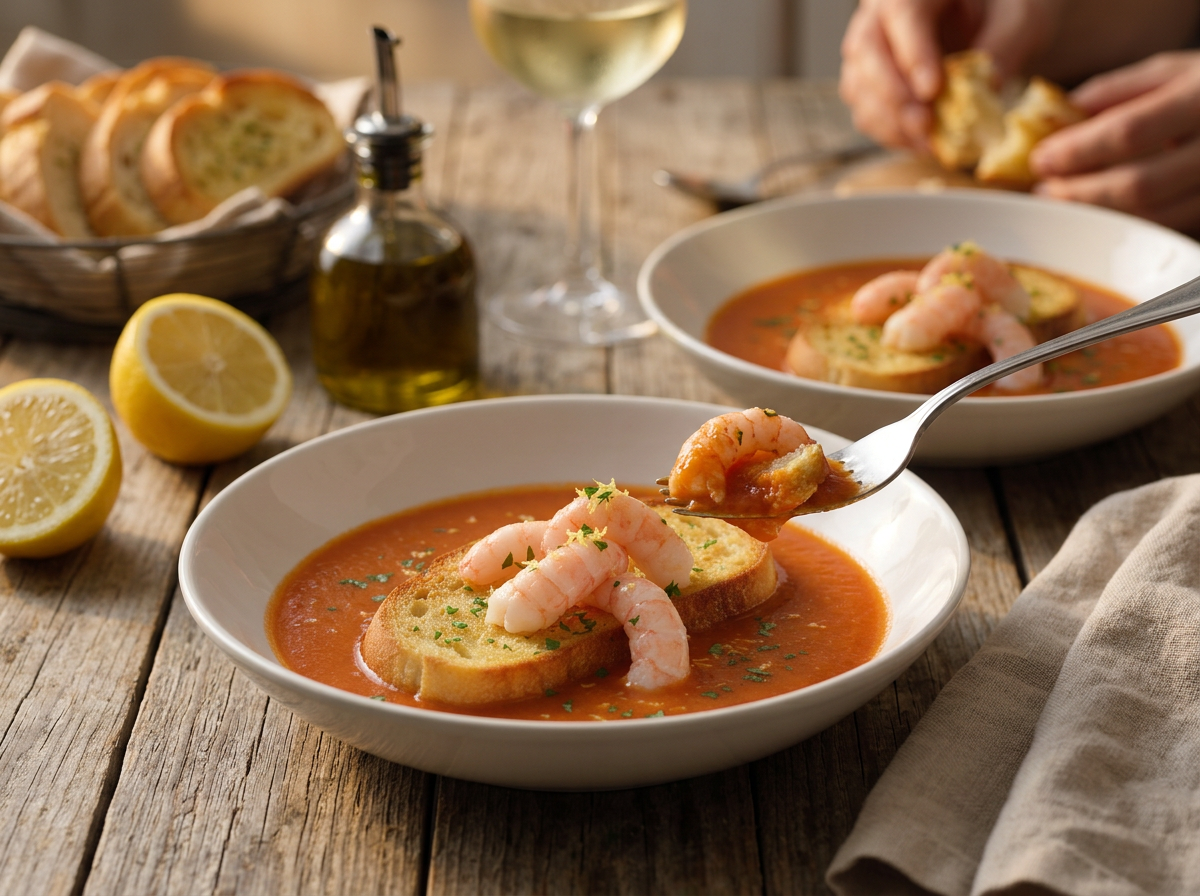
Serve zuppa di scampi in warmed, shallow bowls over a slice of garlic-rubbed ciabatta, with 3 tails per person. Ladle the broth over the toast at the table, since the bread starts to soften after about 5 minutes.
A shaved fennel and orange salad on the side keeps the meal light. For a heartier bowl, add a few boiled new potatoes.
Pour a chilled Vermentino or Falanghina, and put a lemon wedge on the table for anyone who wants more brightness.
FAQ
Why are my langoustine tails rubbery in zuppa di scampi?
They cooked too long. Langoustine tails need only 2 minutes in a gentle simmer, until opaque and just firm, which is 145 F / 63 C inside. Past 3 minutes the proteins tighten and the meat turns rubbery, so keep the broth at small bubbles and serve right away.
Can I use shrimp instead of langoustines in zuppa di scampi?
Yes, use 800 g head-on large shrimp. The heads and shells still make the stock, so don’t buy peeled ones. Shrimp tails also need 2 minutes in the simmering broth, though the flavor is a little less sweet and the soup tastes closer to a classic zuppa di gamberi.
Can I freeze the stock for zuppa di scampi?
Yes, freeze the strained stock (without tails) in a sealed container for up to 3 months. Thaw it overnight in the fridge, bring it to a simmer, then add fresh tails. Freezing the finished soup is a poor idea, since a second round of heat dries out the tails.
What goes well with zuppa di scampi besides bread?
A shaved fennel and orange salad cuts through the rich shellfish broth, and boiled new potatoes work if you want a heartier bowl. Pour a chilled Vermentino or Falanghina alongside. Keep the rest of the meal light so the langoustine flavor stays in front.
Is zuppa di scampi gluten free?
The soup itself is gluten free, since the broth uses only shells, vegetables, tomatoes, wine, and olive oil. The garlic toast is the only gluten source. Serve the soup over gluten-free bread or boiled potato, and check the tomato paste label. It’s also dairy free, but it contains shellfish.
What is the difference between zuppa di scampi and shrimp scampi?
Zuppa di scampi is a brothy Italian soup made with langoustines, which Italians call scampi. American shrimp scampi is a dish of shrimp in garlic, butter, and white wine sauce, usually served over pasta or bread. The soup builds its body from simmered shells, while shrimp scampi has no stock at all.