Ingredients
Method
Make the Ragù
- Heat olive oil or butter in a large pan over medium heat.
- Add onion (with cloves), celery, and carrot. Cook until soft and glossy, about 6–8 minutes.
- Add chopped meats (except giblets) and pancetta. Brown until edges caramelize, about 10–15 minutes.
- Pour in white wine and deglaze the pan, scraping up browned bits.
- Stir in tomato paste and enough water or broth to cover the mixture loosely.
- Simmer slowly for about 45–60 minutes, stirring occasionally.
- In a separate pan, sauté the giblets in a bit of oil for 4–6 minutes until fragrant, then fold them into the ragù near the end.
- The sauce should be loose and glossy—not too thick.
Make the Béchamel
- In a saucepan, melt butter over low heat.
- Add flour and whisk into a smooth roux; cook 1–2 minutes.
- Gradually add warm milk, whisking constantly until smooth and creamy.
- Season lightly with salt and a pinch of nutmeg.
- The sauce should coat a spoon but still flow easily.
Prepare the Pasta Sheets
- For homemade dough: mix flour and eggs, knead until smooth, rest 30 minutes. Roll thin sheets.
- Blanch each sheet briefly (about 1 minute) in salted boiling water.
- Lay on clean towels to dry slightly.
- (If using dry “no-boil” sheets, skip blanching and ensure your ragù is slightly wetter.)
Assemble the Vincisgrassi
- Grease a rectangular baking pan with butter.
- Spread a thin layer of béchamel on the bottom.
- Add a layer of pasta, then spoon over a thin ragù layer, then a light béchamel veil.
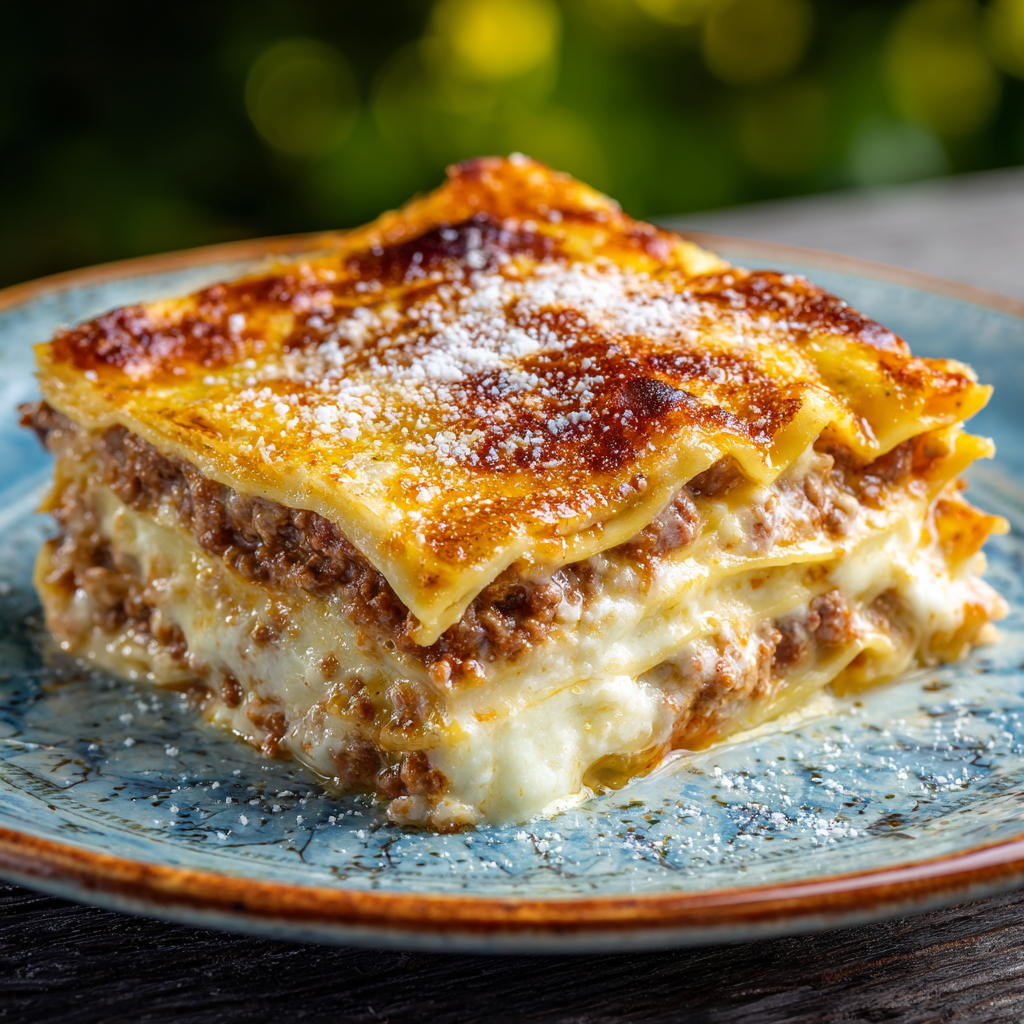
- Repeat this pattern for seven total layers, ending with béchamel on top.
- Sprinkle grated Parmigiano-Reggiano and add a few small butter knobs.
Bake
- Bake in a preheated oven at 200°C (390°F) for 30–35 minutes.
- The top should be bronzed and edges slightly crispy.
- Let rest 10 minutes before slicing so layers set properly.
Notes
- Authentic Vincisgrassi doesn’t use minced beef; the rustic texture comes from hand-chopped meats.
- Be generous with sauce moisture—too dry, and layers won’t fuse properly.
- Always season each component lightly (soffritto, meats, béchamel) for a balanced final flavor.
- Let it rest before cutting; it firms up for clean slices.
- Corners are prized—crispy, caramelized, and full of flavor.