Ingredients
Method
Make the chitarra dough
- Mound the 00 flour on a clean work surface and make a wide well in the center. Add the eggs, egg yolks, and salt to the well.
- Beat the eggs gently with a fork, then gradually draw in flour from the inner walls of the well until a shaggy dough forms.
- Knead the dough with the heel of your hand for 8 to 10 minutes until smooth and slightly elastic. The surface should feel like soft leather, not sticky.
- Wrap the dough tightly in plastic wrap and rest at room temperature for 30 minutes.
Make the pallottine
- Combine the ground pork, ground veal, egg, Pecorino, breadcrumbs, parsley, garlic, nutmeg, salt, and pepper in a large bowl. Mix with your hands until just combined - don't overwork the mixture.
- Roll the mixture into balls about 1.5 cm in diameter (roughly the size of a large marble). Place on a floured tray. You should get around 50 to 55 pallottine.
- Heat 2 tbsp olive oil in a 12-inch skillet over medium-high heat. Brown the pallottine in two or three batches, turning gently, for about 3 minutes per batch until lightly golden on most sides. Transfer to a plate. They will not be fully cooked at this stage.
Make the tomato sugo
- In the same skillet, reduce heat to medium. Add 3 tbsp olive oil and cook the onion for 6 to 7 minutes until soft and pale golden.
- Add the garlic and cook for 1 minute until fragrant but not browned.
- Pour in the white wine and stir, scraping up any browned bits from the pan. Let it bubble for 2 minutes until the sharp smell cooks off.
- Add the crushed tomatoes, basil, salt, and pepper. Stir and bring to a gentle simmer.
- Add the browned pallottine to the sugo. Simmer uncovered over low heat for 18 to 20 minutes, stirring occasionally, until the sauce has thickened and the pallottine are cooked through. Cut one open - it should be pale with no pink center.
Cut the chitarra
- Divide the rested dough into four pieces. Working with one piece at a time (keep the rest covered), roll on a lightly floured surface to a rectangle roughly 2 mm thick - about the width of your chitarra frame.
- Lay the sheet across the chitarra strings. Using a rolling pin, press firmly and evenly from one end to the other in one slow pass. The strings will cut the dough into square-section strands. Dust with flour and set aside on a floured tray. Repeat with remaining dough portions.
Cook and plate
- Bring a large pot of water to a rolling boil. Add the coarse salt. Cook the chitarra for 2 to 3 minutes until al dente - they should have a slight bite at the center.
- Reserve 120 ml of pasta cooking water, then drain the chitarra.
- Add the chitarra to the sugo pan over low heat. Toss well, adding a splash of pasta water to loosen if needed. The pasta should be coated in a glossy, clingy sauce.
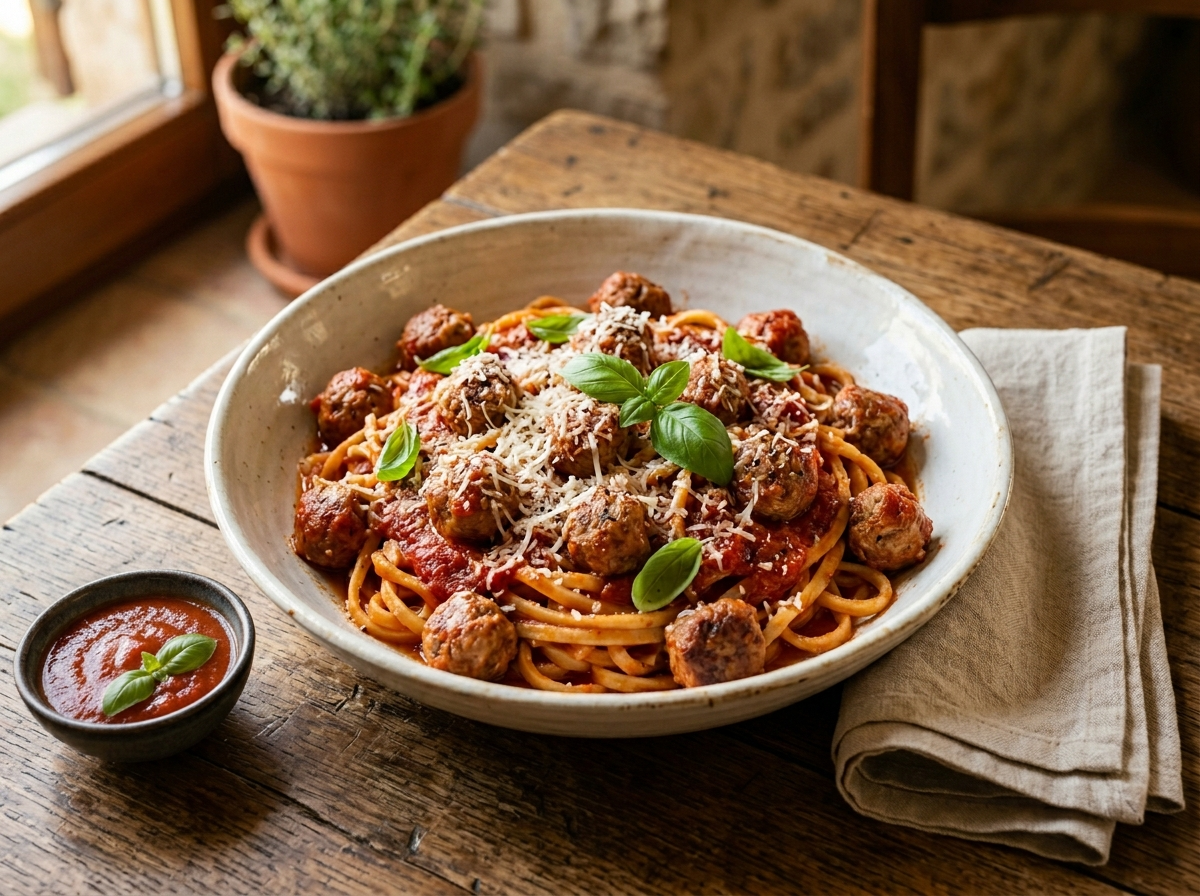
- Divide among four wide pasta bowls, distributing the pallottine evenly. Finish with freshly grated Pecorino Romano and a drizzle of raw extra-virgin olive oil.
Notes
If you have a double-sided chitarra, use the wider-spaced strings for a thicker, more rustic strand that holds up to the weight of the pallottine. The narrower side produces a more delicate cut closer to spaghetti.