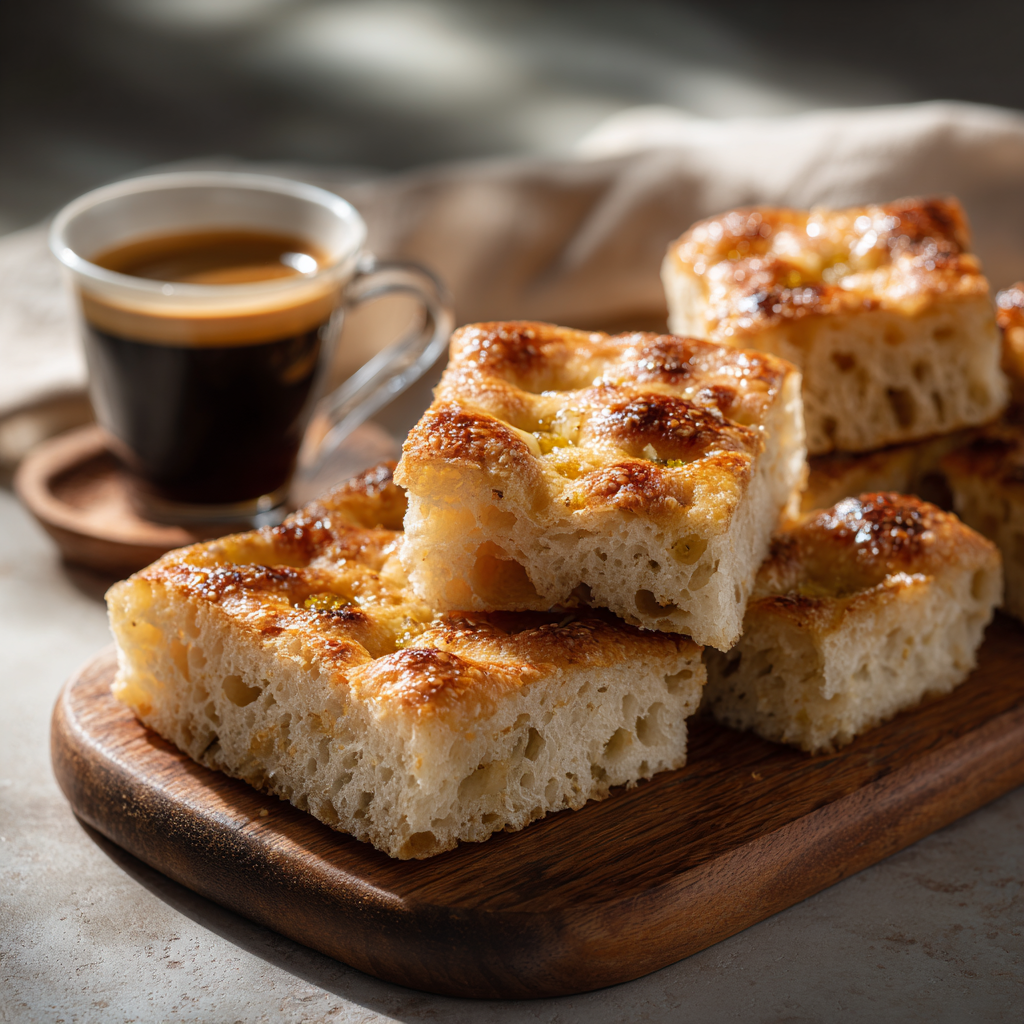
Ingredients
Method
Make the sponge (12–14 hours)
- Mix flour, water, and a pinch of yeast in a small bowl.
- Cover and rest at room temperature for 12–14 hours until bubbly and fragrant.
Mix the dough
- Add the sponge to a large bowl.
- Add flour, water, salt, sugar, and olive oil.
- Mix into a shaggy dough.
- Knead until smooth and elastic — the dough should stretch thin without tearing (windowpane stage).
- If adding raisins, fold them in gently.
First rise
- Cover the bowl with plastic wrap.
- Let rise at room temperature until soft, airy, and roughly doubled.
Pan and shape
- Grease an 18×13 inch sheet pan (or two 13×9 pans) with olive oil.
- Place the dough in the pan and stretch it to cover about 70% of the surface.
- Let it relax for a few minutes.
- Finish stretching gently to all corners.
- Let rest 10–15 minutes so the gluten relaxes.
Make deep dimples
- Lightly dust the surface with flour.
- Use three fingers at a time and press firmly down in rows.
- Create deep, even wells all over the dough.
Add the brine
- Mix the water and salt until dissolved.
- Pour the brine over the surface, filling the dimples.
- Add a small drizzle of olive oil.
- Rest 40–60 minutes so the dimples settle.
Bake
- Preheat the oven to 450°F (232°C).
- Bake for 15–18 minutes until the top is hazelnut-golden and the holes inside look pale and glossy.
- Rotate pans halfway if using two.
Finish and cool
- Slide a thin spatula under a corner and lift the bread out immediately to avoid steaming the bottom.
- Brush lightly with extra-virgin olive oil on top (and bottom if you like).
- Cool on a rack until edges stay crisp.
Notes
- Keep toppings light so the dough can rise properly and the dimples stay defined.
- Use extra-virgin olive oil with a fruity aroma—it's a big part of the flavor.
- Cooling on a rack is key. If the bread sits in the pan, the bottom turns soft.
- A hot oven is everything: don’t skip a full preheat.
- If your kitchen is cold, give the dough extra time — visual cues matter more than timing.